Edible Honeysuckle
Edible honeysuckle berries are the first fresh fruit after winter, ripening in June.
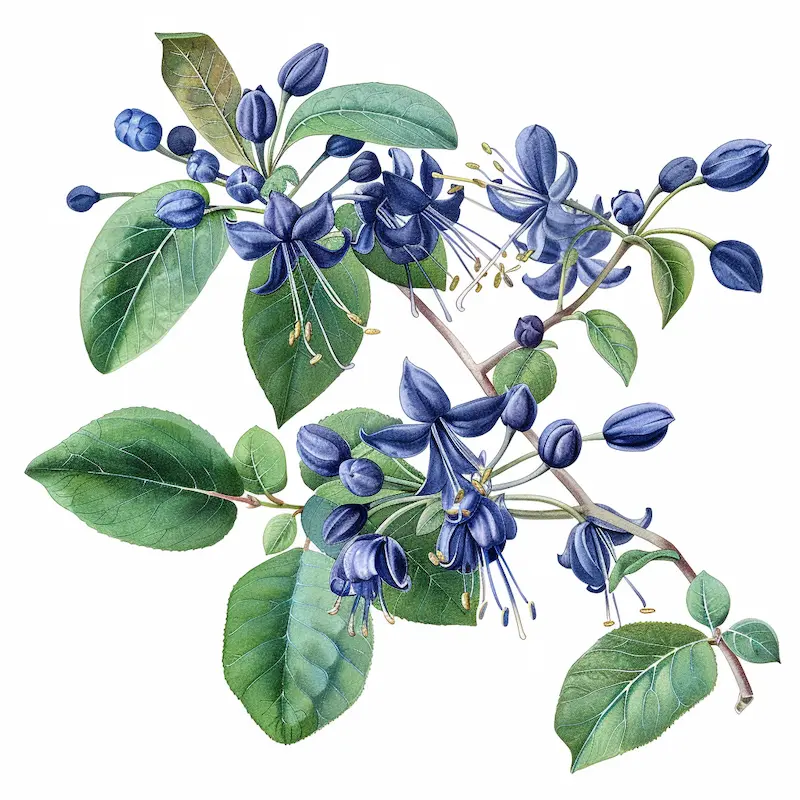
Blue honeysuckle is one of the most fascinating berry crops for a gardener seeking an early harvest. Native to the Russian Far East and Eastern Siberia, it has been cultivated in those regions for centuries, and in recent decades has captured the hearts of gardeners worldwide. Undemanding and frost-hardy, it adapts beautifully to the Ukrainian climate, yielding its first fresh crop as early as June—when most berries are still far from flowering.
Blue honeysuckle stands out in the garden thanks to its delicate twigs clothed in fine foliage and distinctive blue berries that ripen very early. Unlike ornamental honeysuckles, garden varieties are genuine fruit producers, delivering a generous harvest year after year. The plant flowers in April and May with modest yet charming blossoms beloved by early insects.
The principal advantage of edible honeysuckle in the garden is its companionability: it readily neighbours chokeberry, blackcurrant and gooseberry, creating a true berry family. The berries are not only delicious and nutritious, but also remain patiently on the branches—they do not drop like many other crops. Every gardener who values earliness, reliability and beauty should grow this plant; without it, the season becomes routine. Blue honeysuckle is the symbol of those gardeners who know that the garden truly comes alive at the season's beginning.
Edible Honeysuckle — planting & location
EARLIEST fruit—ripens in June!
How to water Edible Honeysuckle
Important during fruit ripening
Fertilizing and pruning: Edible Honeysuckle
Remove branches that lie on the ground