Golden Currant
The flowers of golden currant are fragrant, with a scent similar to vanilla or cloves.
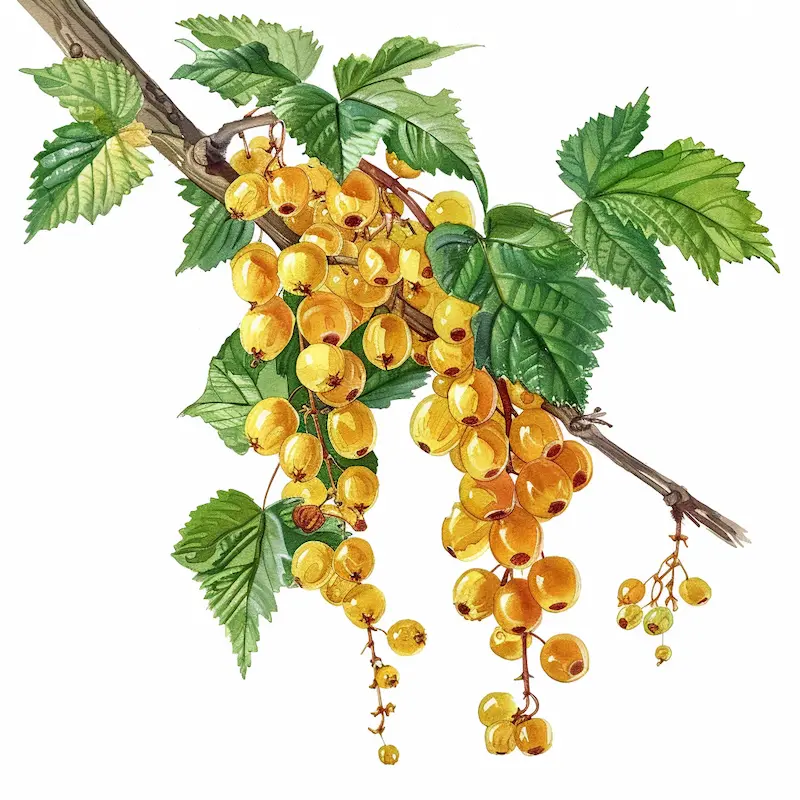
Golden Currant is an excellent choice for the gardener seeking a carefree plant with beautiful flowering. This North American species has long been established in European gardens and is cherished for its undemanding nature and early spring bloom. Yellow flowers open in April and May, filling the garden with lovely light and delicate fragrance reminiscent of carnations or vanilla — which is precisely why many gardeners consider it one of the most fragrant currants.
The plant forms a compact bush standing 1.5–2 metres tall, with dense foliage and numerous flowers that subsequently develop into small berries of golden-black colouration. Golden Currant impresses with its remarkable versatility: it thrives equally well in sunny spots and partial shade, tolerates any soil type (provided it is not overly acidic), and requires minimal care. This makes it ideal for gardens of all sizes — from modest residential plots to expansive park complexes.
In garden design, Golden Currant works beautifully alongside blackcurrants, gooseberries, and honeysuckle, creating a striking berry composition. Watering should be moderate, and feeding minimal: nitrogen in spring for vegetative growth, superphosphate in August to strengthen the bush before winter. Old branches are removed annually after 7–8 years of growth, ensuring the plant remains rejuvenated.
If you are seeking a plant that blooms early, smells wonderfully, and yet does not demand constant attention — Golden Currant is precisely what you need. It withstands frosts down to minus 35 degrees Celsius, thus rarely requiring winter protection, and is wholly recommended for all regions of Ukraine.
Golden Currant — planting & location
Fragrant flowers with a clove-like scent; berries of various colours
How to water Golden Currant
Moderate watering
Fertilizing and pruning: Golden Currant
Remove old branches (7+ years)