Blackcurrant
Blackcurrant is a record-holder for vitamin C content among berry-bearing shrubs
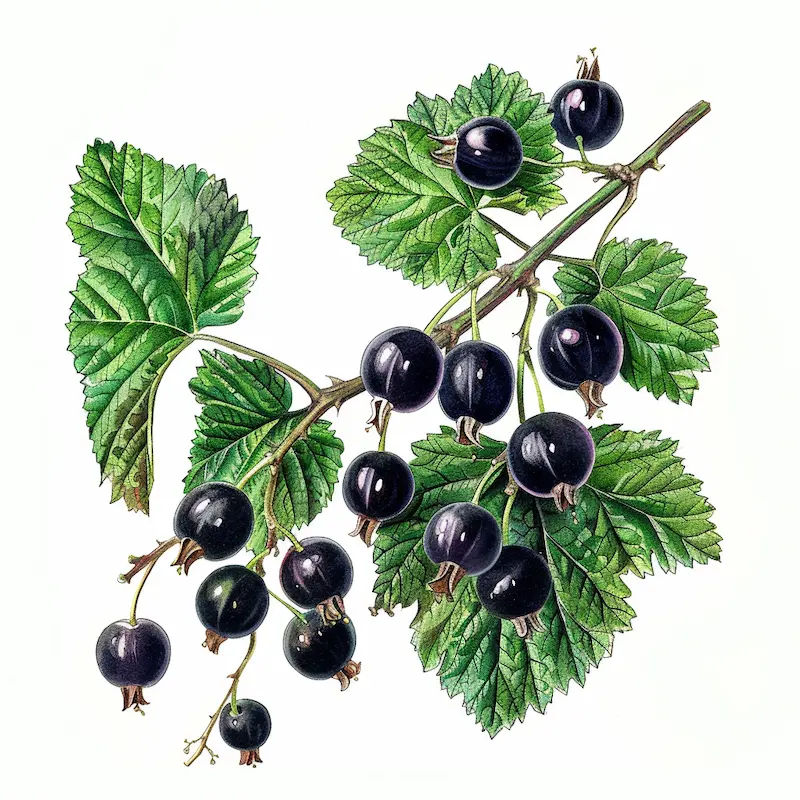
Blackcurrant is one of the most undemanding berry crops, valued by gardeners for centuries. It originates from the northern regions of Europe and Asia, where it grew wild before eventually conquering gardens worldwide thanks to its productivity and beneficial properties. In nature, blackcurrants can be found along riverbanks and in wetland forests, where they have adapted excellently to cool climates.
This sprawling shrub impresses with its remarkable diversity. In spring, when small yellowish-green flowers appear (April–May), bees and bumblebees visit the plant. During summer, small black berries emerge where the flowers were, glistening in the sun. Breeders have developed dozens of varieties with different ripening periods and fruit sizes—from tiny but particularly aromatic berries to larger fruits. Each variety has its own character: some produce early harvests, whilst others reward until late autumn.
In the garden, blackcurrant is an excellent helper for creating living hedges or background plantings. It looks wonderful alongside redcurrants, gooseberries, and honeysuckle, forming a dense, vigorous shrub that becomes a true treasure trove of vitamins. From spring through autumn, the plant appears decorative, and in July–August, the berries ripen—the moment when all the effort is rewarded with a generous harvest.
Knowing that these tiny berries contain four times more vitamin C than lemons, one wishes to plant a bush in their garden immediately. Blackcurrant is not merely a plant, but a summer ritual: picking berries on a warm day, the scent of leaves on your fingers, and the feeling of that special joy when nature shares its treasures with us.
Blackcurrant — planting & location
Berries contain 4× more vitamin C than lemon
How to water Blackcurrant
Particularly important to water during the ripening period
Fertilizing and pruning: Blackcurrant
Remove 5–6-year-old branches to ground level