Gooseberry
Known since the 12th century in France, it is one of the oldest cultivated berry bushes.
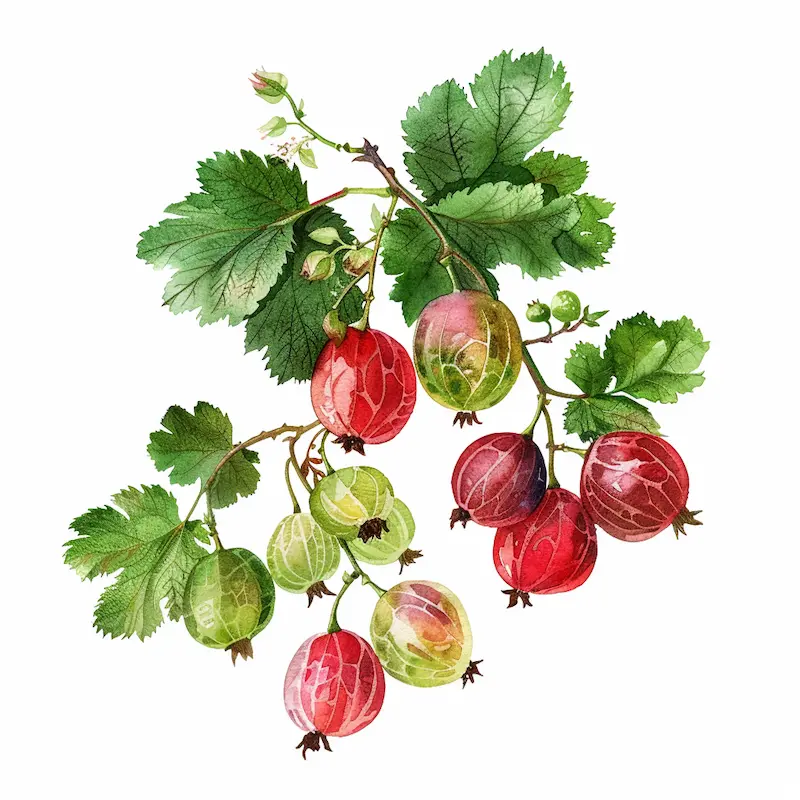
Gooseberry is one of the oldest cultivated berry shrubs, which European gardeners have grown since the 12th century. Its popularity is no accident: this undemanding plant produces generously even in a small area, and the berries astound with their colour diversity—from pale green to deep crimson tones. It is an excellent choice for those seeking a reliable garden companion without excessive fuss.
The shrub develops into a compact natural form, with flexible branches often covered in sharp spines—nature's true armour against pests. In spring, from April through May, the plant displays small, inconspicuous flowers that subsequently transform into wonderful fruits. Depending on the variety, berries can be tart and ideal for preserving and jam-making, or pleasantly sweet for fresh eating straight from the branch—every gardener will find a variety to their taste.
In the garden, gooseberry thrives excellently alongside blackcurrants, redcurrants and raspberries, creating an aesthetically pleasing 'berry zone'. The plant deserves minimal care: it requires a sunny position or semi-shade and moderate watering, particularly during fruit ripening. The gardener's main task is to remove old five-year-old branches and those trailing on the ground, and the shrub will reward with a generous harvest year after year.
Thanks to its natural hardiness and undemanding nature, gooseberry grows successfully throughout all regions of Ukraine and worldwide. This is a plant with a long history of success, serving gardeners faithfully and tirelessly for years. If you seek a crop that gives more than it demands, gooseberry is precisely what you need.
Gooseberry — planting & location
Thorny, fruits of various colours, tart or sweet
How to water Gooseberry
Particularly important during fruit ripening
Fertilizing and pruning: Gooseberry
Remove branches older than 5 years and any branches lying on the ground