Blue honeysuckle
Pollination partner required: plant a minimum of 2 different varieties for successful fruit set.
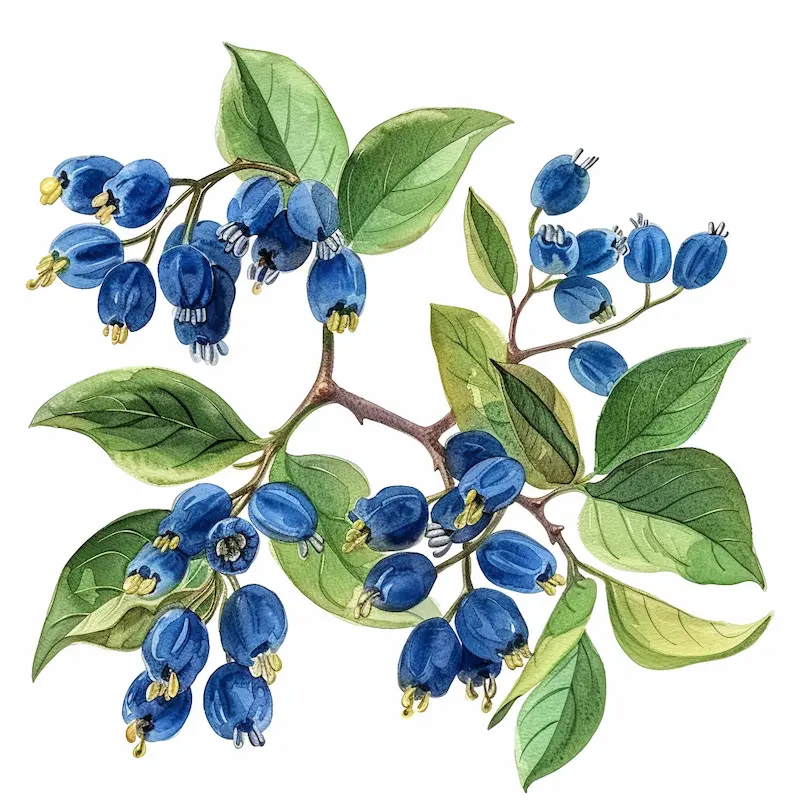
Blue honeysuckle is one of the most valuable berry crops for the Ukrainian garden, as it produces the first harvest when other plants have yet to bloom. This is a shrub of Far Eastern origin, which has been cultivated for centuries in Russia and Siberia, and is now capturing the hearts of gardeners worldwide. The plant impresses with its hardiness and generosity: it flowers in April and May with delicate yellowish blooms, and by June it yields the first blue-hued berries, which in flavour resemble a blend of blueberry and raspberry with a subtle tartness.
Externally, blue honeysuckle is a compact, spreading shrub with elegantly elongated leaves and slender, flexible branches. Popular cultivars on the market include 'Kamchatka', 'Blue Bird', and 'Turksib', which differ in berry size and ripening time. The most prized are the large-fruited forms, which yield 2–3 kilograms of sweet berries from a single plant. Experienced gardeners combine them in the garden with currants and gooseberries, creating a genuine berry patch in a miniature space.
Growing blue honeysuckle is straightforward—it requires a sunny or partially shaded location and is not dependent on soil composition. The one point often overlooked by beginners is that it is a cross-pollinating plant, so plant a minimum of two different cultivars close together. Without this, the harvest will be meagre, even with perfect care of the shrub.
Blue honeysuckle deserves a place in every garden because it is the first herald of the fruit season. When spring is still half-forgotten and the soil has barely thawed from frost, you can already harvest the first berries and delight your family. It is not merely a plant—it is the harbinger of summer.
Blue honeysuckle — planting & location
The earliest edible berries in the garden (June).
How to water Blue honeysuckle
Maintain soil moisture during fruiting.
Fertilizing and pruning: Blue honeysuckle
Remove old branches and any branches touching the ground.