Winter Jasmine
Flowers at –10°C—blooms emerge directly from the snow.
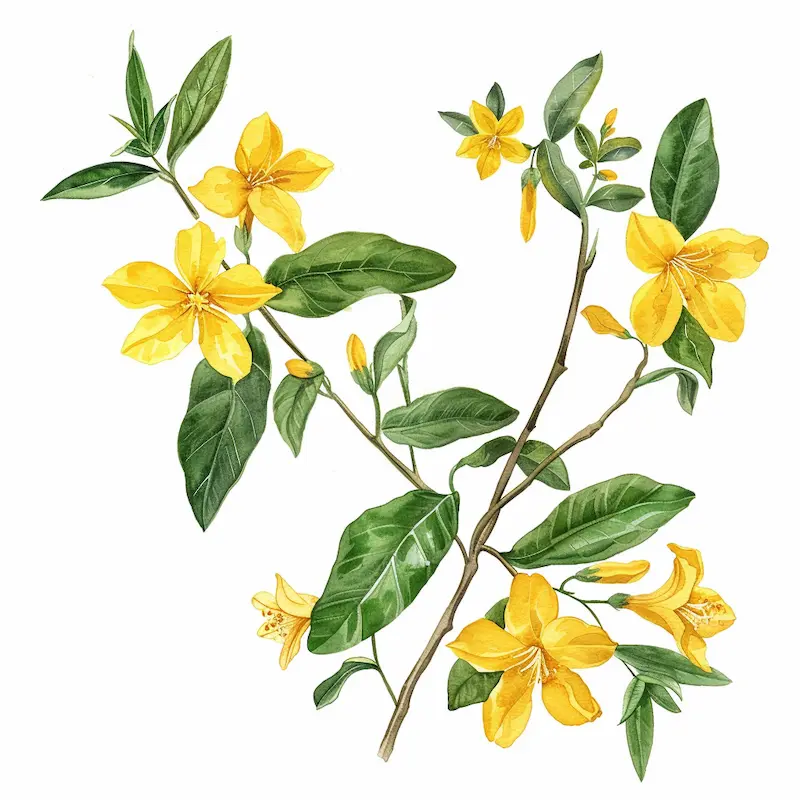
Winter Jasmine is one of the most beloved early harbingers of spring in Ukrainian gardens. This delicate Chinese shrub has been cultivated for over three centuries and remains popular among gardeners for its remarkable ability to flower during the darkest months of the year. Unlike its heat-loving relatives, Winter Jasmine has adapted perfectly to temperate climates and delights with golden blooms from February onwards, sometimes even flowering through the snow.
This plant appeals not only for its exceptional flowering time but also for its simplicity. Delicate yellow flowers unfurl on still-bare, often jet-black stems—creating a magical contrast that makes the shrub a true ornament during the period when the garden is still dormant. Winter Jasmine is undemanding, thriving in any soil type, and integrates seamlessly into compositions with forsythia, dogwood, or weigela. Its flexible branches allow you to train the plant as a vertical accent against a wall or as a fuller decorative shrub in the centre of a border.
In the garden, Winter Jasmine serves as a natural antidepressant: during February's chill, its golden flowers symbolise the approach of spring and nature's awakening energy. In the central, southern, and western regions of Ukraine, it thrives freely and requires no complex winter protection. Watering should be moderate, with the main task being the removal of spent shoots by one-third of their length after flowering to keep the shrub compact and full.
If you dream of a garden that flowers year-round, begin with Winter Jasmine. Its subtle beauty and undemanding nature will make it a reliable companion for years to come, and its early flowers will offer hope even on the coldest days.
Winter Jasmine — planting & location
Flowers in winter to early spring on bare branches.
How to water Winter Jasmine
Moderate watering.
Fertilizing and pruning: Winter Jasmine
Remove spent branches by one-third.