Forsythia × intermedia
Flowers every spring on the previous year's shoots—do not prune in summer.
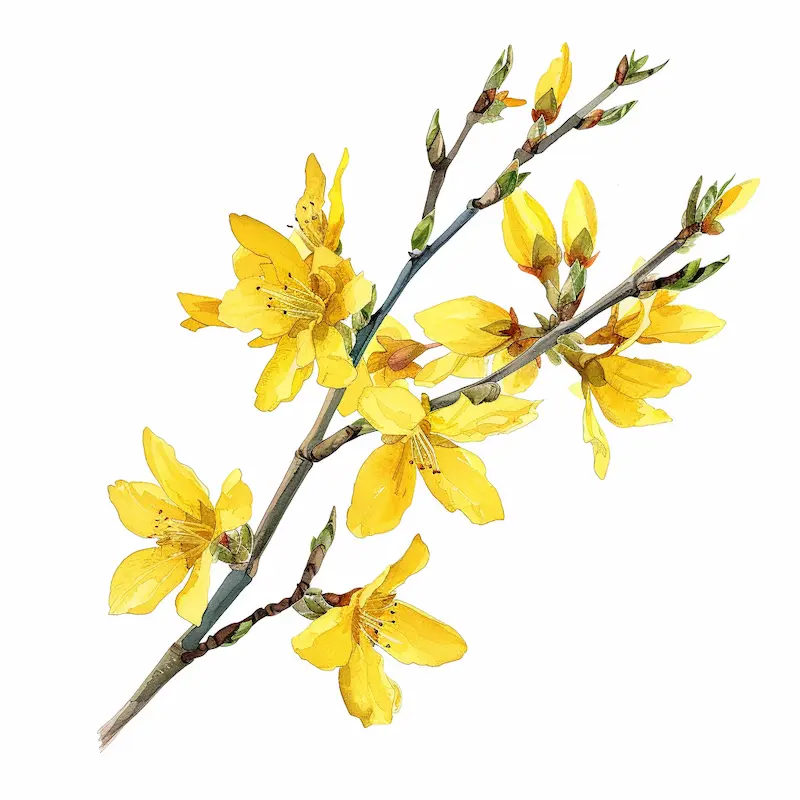
Forsythia × intermedia is one of spring's first harbingers in the garden, captivating gardeners with a golden wave of flowers before leaves even appear. This hybrid, created by crossing European and Chinese forsythia species, proved to be the most adaptable to temperate climates. Its popularity is well-deserved: the plant is undemanding in growing conditions, produces abundant blooms year after year, and fits into compositions of any style—from formal gardens to natural corners.
This shrub's structure is highly decorative: long, flexible branches in March–April become covered with small bright yellow flowers, which bloom on previous year's shoots before the plant leafs out. In time, linear dark green leaves appear and maintain their ornamental appeal until autumn. Plant breeders have developed numerous cultivars with varying flower shades—from pale yellow to brilliant gold, and some varieties even produce double flowers.
In the garden, forsythia works wonderfully as a specimen plant, but truly shines in group plantings—particularly alongside lilac, spirea, or early-flowering trees. It requires no special care: moderate watering, sunny or semi-shaded location, any soil type. The key is remembering to prune: remove one-third of old branches immediately after flowering to achieve a denser and fuller shrub the following year.
Anyone who has ever seen forsythia in full bloom cannot do without it in their garden. It is a symbol of that miraculous moment when nature awakens from winter's sleep, and this moment is worth celebrating every year right at your doorstep.
Forsythia × intermedia — planting & location
First shrub to flower in spring—still without foliage.
How to water Forsythia × intermedia
Moderate watering.
Fertilizing and pruning: Forsythia × intermedia
Remove one-third of old stems at ground level.