Common lilac
Flowers 4–5 years after planting from cuttings
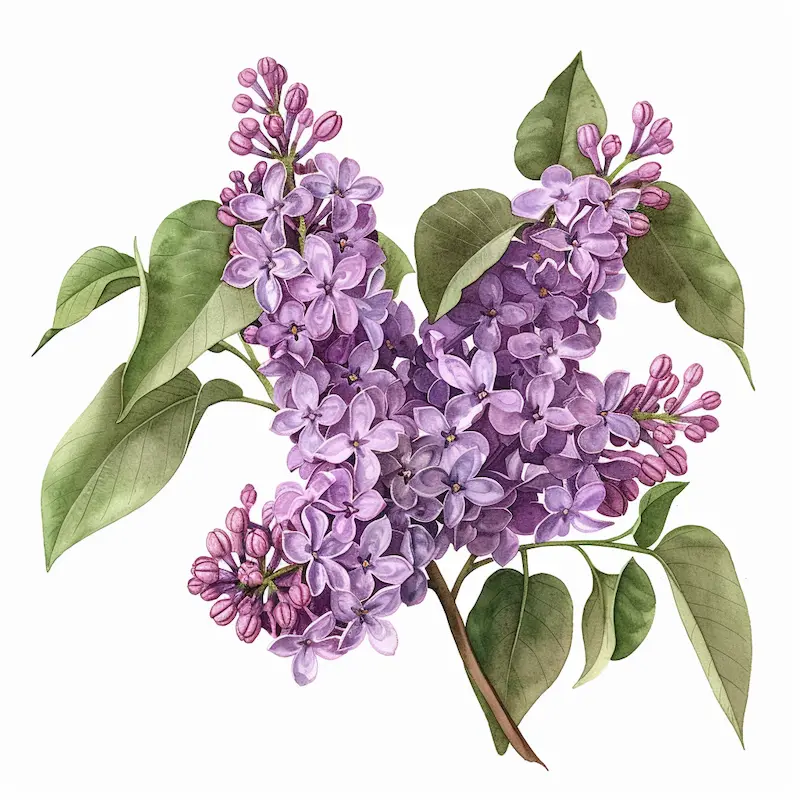
Common lilac is one of the most beloved ornamental shrubs in gardens throughout Ukraine and the world. Its history in cultivation spans several centuries: the plant arrived in Europe from the Balkans and Asia Minor in the sixteenth century, and subsequently won the hearts of gardeners everywhere. This very species became the parent plant for hundreds of varieties we grow today — from classic violet-lilac to pure white, from delicate pink to rich burgundy shades.
The lilac's flowering is a true spring spectacle that unfolds in May. Dense flower clusters fill the garden with an enchanting fragrance impossible to confuse with anything else. Some varieties bestow double flowers upon the gardener, resembling roses — equally refined and elegant as simple forms. Every gardener will find something to cherish among the variety of cultivars.
In the garden, lilac plays the role of a versatile reliable performer: it looks wonderful as a specimen plant, yet in group compositions with spiraea, forsythia or hawthorn it becomes a true ornament. This unpretentious and dependable plant allows even beginners to achieve impressive results. A single such 'classic' planting readily becomes a cherished feature for many years.
If you have decided to plant lilac from cuttings, arm yourself with patience: the first flowers appear only after four to five years. But when they finally bloom, the wait is justified a hundredfold. On any Ukrainian homestead there is room for this classic shrub — it fits organically into gardens of any size and style, whether rural or urban.
Common lilac — planting & location
Flowers once per year; do not prune after August
How to water Common lilac
Dislikes waterlogged soil
Fertilizing and pruning: Common lilac
Cut back to the first pair of healthy leaves