Hawthorn
Hawthorn lives 500–700 years — longer than oak trees
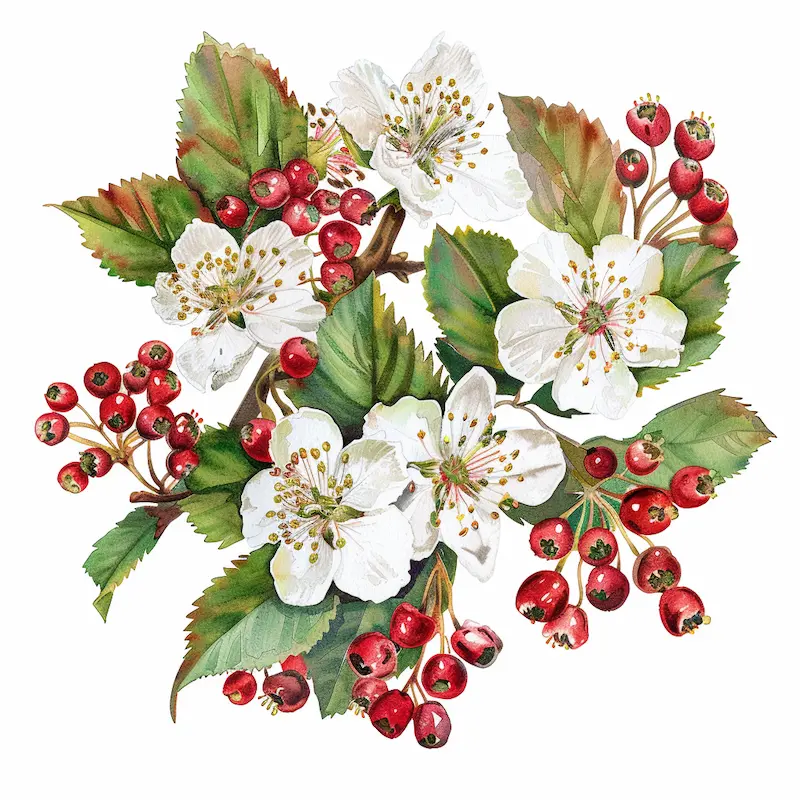
Common hawthorn is a captivating plant with deep roots in European culture. Its history extends back to ancient times, when people valued it not only as an ornamental but also as a medicinal and edible tree. Widely distributed in the wild throughout Europe and Western Asia, hawthorn has confidently established itself in the gardens of growers seeking an undemanding and reliable plant.
Despite its modest appearance, this shrub makes an impression precisely through its simplicity and natural character. In spring, it becomes covered with tiny white or pink flowers that bloom in May and envelop the branches in a dense cloud of fragrance. In autumn, small red berries appear where the flowers were—fruits beloved by birds and usable for making jam or smoothies. Some varieties produce particularly abundant harvests, making hawthorn an excellent feeding tree for wildlife.
In the garden, hawthorn truly excels as a hedge. Its dense crown and sturdy thorns make it a natural protector of your plot whilst maintaining a light and airy appearance. It pairs beautifully with rowan, viburnum and dog rose, creating a composition that offers you not only aesthetic pleasure but also practical benefit throughout the season.
The most remarkable fact about hawthorn is its longevity. The tree lives 500–700 years, outlasting even mighty oaks! This means a plant you set today can serve several generations of your family. Hawthorn is remarkably disease-resistant, requires no special care, and guarantees a useful harvest. If you seek a plant that will 'work' for your garden without excessive attention, hawthorn is your choice.
Hawthorn — planting & location
Hedging plant, edible berries, attracts birds
How to water Hawthorn
Drought-tolerant once established
Fertilizing and pruning: Hawthorn
Form hedges up to 3 times per year