Rugosa Rose
100 g of rosehips provides the daily vitamin C requirement for 8 people
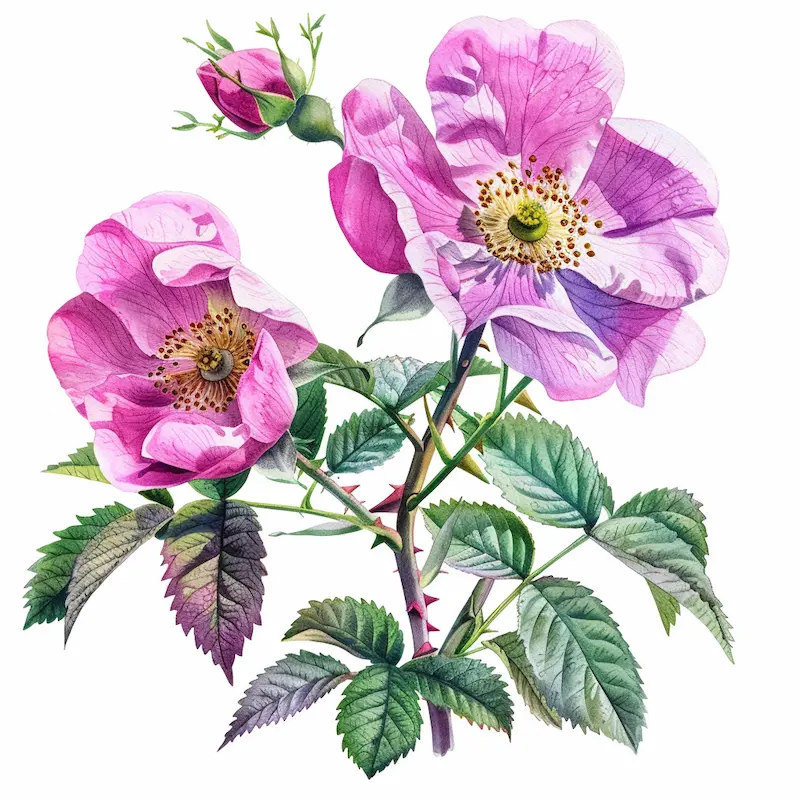
The Rugosa Rose is one of the most undemanding and beautiful ornamental shrubs, native to East Asia. It has long won the hearts of gardeners thanks to its reliability and generous flowering. The plant forms dense, compact bushes, which from June to September produce enormous double and semi-double flowers in shades ranging from soft pink to bright crimson, as well as white varieties. After flowering, large orange-red fruits develop and often remain on the branches until the first frosts, adding vibrant colour to the garden.
In the garden, the Rugosa Rose proves itself as a versatile plant—it looks equally attractive in group plantings, as a standalone ball-shaped specimen, or as a low informal hedge. Its wrinkled, dark green foliage is decorative throughout the season and turns yellow and orange in autumn. Varieties differ in flower colour intensity and bush size, allowing you to select the most suitable option for any specific location in your garden.
This plant deserves a place in the garden because it requires virtually no maintenance. Hardy, winter-proof, and resistant to pests, it combines beautifully with viburnum, hawthorn, and rowan in mixed compositions. The fruits of the Rugosa Rose are a true treasure: just 100 grams provide the body with as much vitamin C as eight people need in a day. An incredible concentration of beneficial generosity on such a modest shrub!
Rugosa Rose — planting & location
Large hips rich in vitamin C, undemanding
How to water Rugosa Rose
Drought-tolerant once established
Fertilizing and pruning: Rugosa Rose
Remove dead wood and excess growth