Black chokeberry
The anthocyanins in chokeberry are the most powerful antioxidant among temperate climate berries.
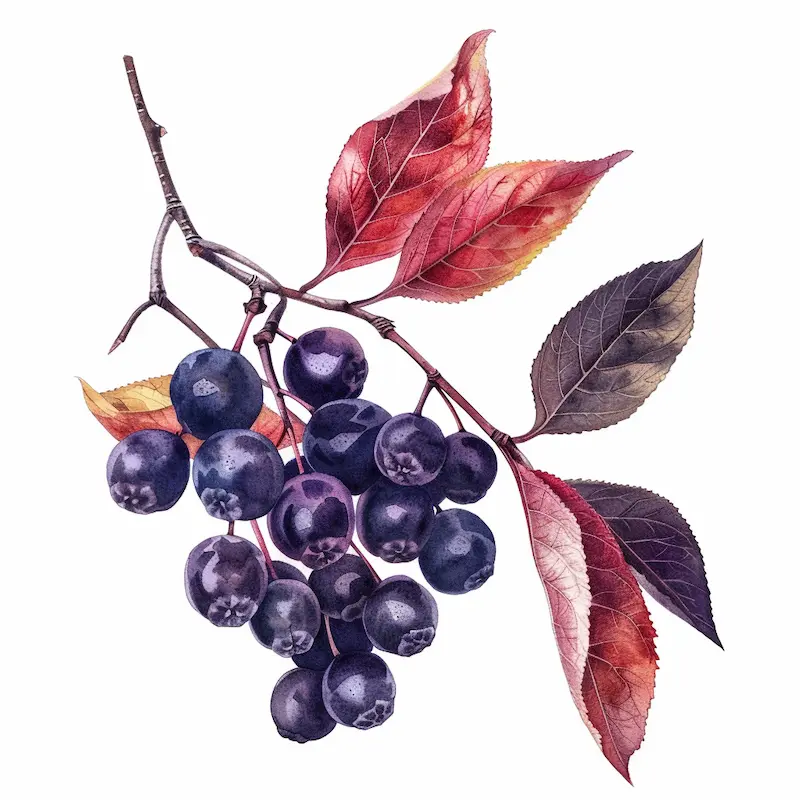
Black chokeberry (Aronia) is an unpretentious fruit crop of North American origin that has successfully acclimatised throughout Ukraine and worldwide. Its history in European gardens began in the twentieth century, when plant breeders appreciated not only its flavour but also the exceptional nutritional content of its berries. Beyond the fruit, the plant impresses with pristine white blossom in May—a true spectacle for bees and other pollinators.
Outwardly, black chokeberry is a low shrub with flexible branches, clothed in fine foliage from June to July, which transforms into deep ruby-burgundy tones by autumn. By late summer, characteristic black berries appear, clustered in grape-like bunches. Modern cultivars vary in ripening time and fruit size, allowing gardeners to extend the harvest period and enjoy beauty at different stages throughout the season.
In the garden, aronia is a versatile plant: it looks particularly attractive alongside viburnum, rowan or sea buckthorn, creating a striking autumn composition. It requires no special location—thriving equally in full sun or partial shade, with modest soil demands. Frozen berries retain their flavour and nutritional value, so the gardener need not rush to harvest until the depths of frost arrive.
Most interestingly, aronia's anthocyanins are recognised as the most potent natural antioxidant among berries of temperate climates. This makes black chokeberry far more than a purely ornamental plant, but a true healer in the garden—particularly valuable for those seeking to combine horticultural beauty with health benefits for their family.
Black chokeberry — planting & location
Healing berries that lower blood pressure, vibrant autumn foliage
How to water Black chokeberry
Moderate watering
Fertilizing and pruning: Black chokeberry
Remove old branches