Rowan
Rowan is a folk charm: Slavic peoples planted it near their homes for protection from evil spirits.
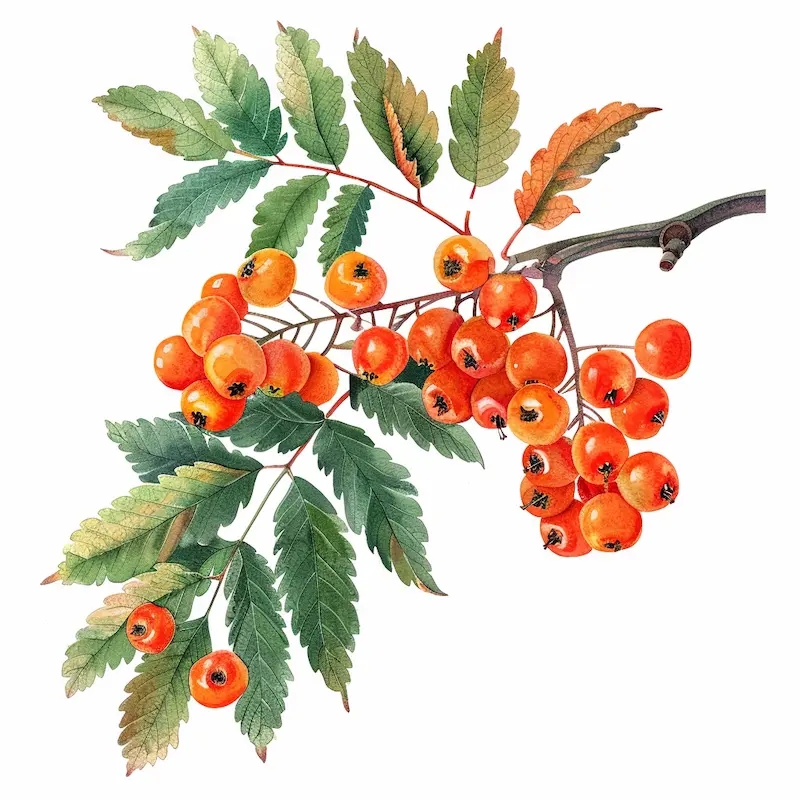
Rowan is one of the most beloved fruiting plants in European traditional gardens. Its history in cultivation spans centuries, and its popularity in Slavic lands is explained not only by its ornamental value but also by deep folk beliefs. This tree was revered as a protective charm, planted near dwelling thresholds to ward off negative influences. Even today, rowan has lost none of its enchantment—it remains a symbol of abundance and prosperity in the family garden.
Outwardly, rowan captivates with its elegance throughout the entire year. In early summer, branches are laden with abundant clusters of delicate white flowers bearing a gentle fragrance that attracts bees and bumblebees. Yet its true beauty unfolds in autumn—bright orange or scarlet berries hang in clusters and accompany the plant well into late autumn, bestowing warm, generous hues upon the garden. The foliage is equally impressive: soft green in summer, in autumn it displays a vibrant palette ranging from golden to sandy-brown tones.
In the garden, rowan serves wonderfully as a focal point or visual screen in mixed compositions. It harmonises beautifully with viburnum, wild rose, and hawthorn, creating a genuine landscape feature. Importantly, this is an undemanding plant—it adapts readily to various conditions, requires no complex care, and needs no regular feeding. Rowan thrives equally well in a small novice's garden or in the spacious grounds of an experienced gardener.
If you have not yet planted rowan in your garden, you are missing an opportunity to honour tradition whilst gaining a plant that will serve for many years without fuss.
Rowan — planting & location
Berries are edible after frost; forms a tree or large shrub
How to water Rowan
Moderate watering
Fertilizing and pruning: Rowan
Remove dead and diseased branches