Tatarian Dogwood
Young stems display coral, red and yellow colouring in winter, creating a striking decorative effect.
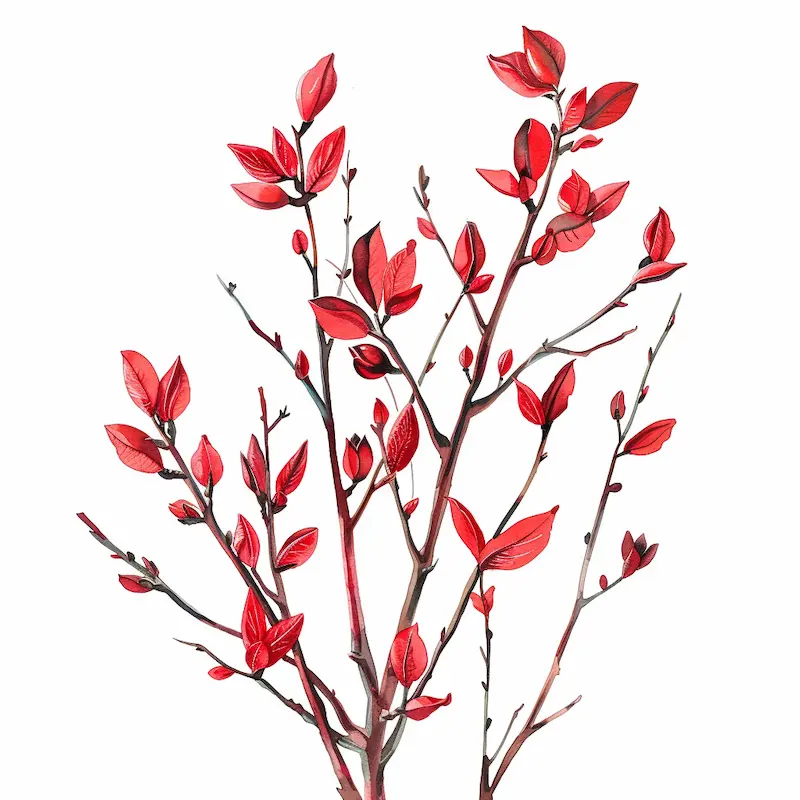
Red-barked Dogwood (Cornus alba) is one of the most popular ornamental shrubs in temperate gardens, originating from Siberia, northern China, and Japan. Gardeners cherish this plant for its undemanding nature and its ability to transform throughout the seasons: in spring it dazzles with delicate white flowers, in summer it delights with fresh foliage, and in winter it becomes a true display of colour thanks to its brilliant stems.
Young shoots of the red-barked dogwood remain a true treasure from November through March. Depending on the variety, they can display deep crimson, coral, or golden-yellow colouration, particularly vivid on new growth. Popular varieties such as 'Sibirica' with its bright crimson bark and 'Aurea' with golden foliage allow you to create striking compositions even in the most modest garden.
In the garden, red-barked dogwood is an ideal companion for compositions with willow, viburnum, and elderberry. It thrives equally well in sunny locations and partial shade, making it a versatile choice for gardens of varying sizes and styles. The plant loves moist soil and appreciates regular watering, especially during dry periods.
This is a plant worth having, if only because it brings joy during the darkest time of year—when the garden seems dull and grey. The sight of a handful of scattered coral-red stems against white snow is already a complete decoration that requires neither flowers nor leaves. It is precisely for such tireless beauty that red-barked dogwood deservedly holds a special place in every gardener's heart.
Tatarian Dogwood — planting & location
Decorative stem bark in winter—bright red.
How to water Tatarian Dogwood
Moisture-loving; thrives even near water.
Fertilizing and pruning: Tatarian Dogwood
Cut back to 30–40 cm from ground level.