Black Elder
The flowers are used to make lemonade and syrups, whilst berries are gathered for jam and medicinal preparations.
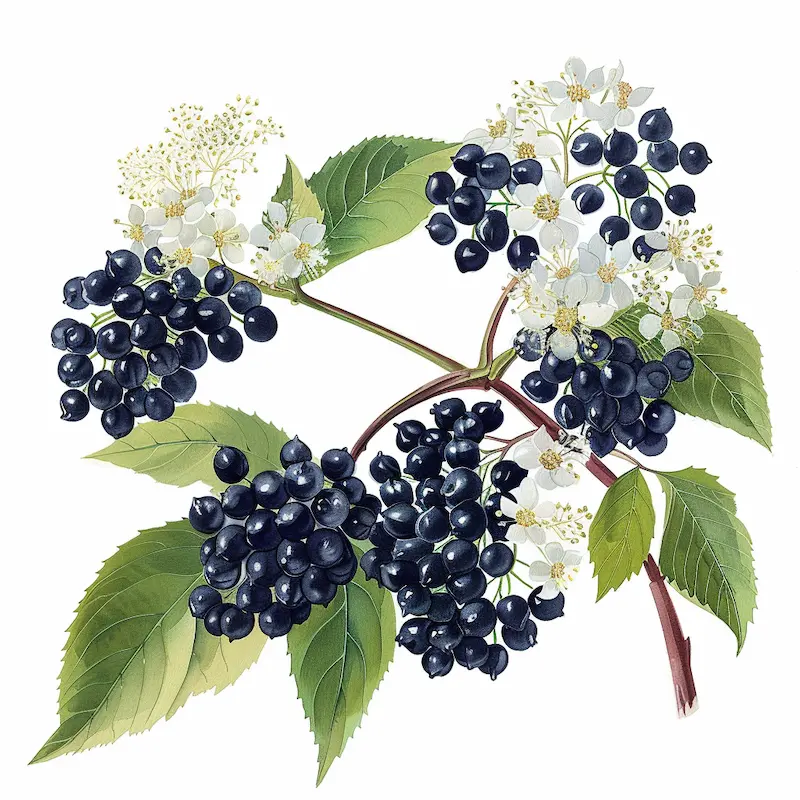
Black Elder is one of Europe's oldest cultivated plants, grown by people for over a thousand years. Native to North Africa and Europe, it is now widespread throughout the world. It is a true garden queen: in June it becomes smothered in foamy white flowers, gathered into dense panicles that release an unforgettable fragrance. In autumn, glossy black berries appear in their place—a beloved delicacy for thrushes and starlings, who gladly flock to feast on your garden.
Outwardly, Elder is an elongated shrub with dark bark and compound leaves, appearing dignified and elegant. The wealth of cultivars allows everyone to find a plant to their taste: 'Black Lace' attracts with deep red, finely-cut foliage that changes colour throughout the season, while 'Aurea' glows with golden leaves and wonderfully illuminates shaded corners of the garden. Despite their varied appearance, all cultivars are equally undemanding to maintain and generous with their flowers.
In the traditional Ukrainian homestead, Elder always stood alongside Viburnum and Rowan—as protector, healer and helper in one. Its flowers are steeped in tea to strengthen immunity, used to make refreshing lemonades and fragrant syrups that impart a magical note to home beverages. The berries become treasures for jams, compotes and tinctures, through which family recipes were passed down from generation to generation. This is why old gardeners always knew: if Elder blooms in your yard, your home will always have a remedy for the first cold or inflammation.
Plant this wonderful shrub in a spot with plenty of sun or light dappled shade, provide it with regular moisture—and it will reward you with years of generosity, filling the air with the fragrance of white flowers and storing berry treasures for you.
Black Elder — planting & location
Medicinal—flowers and berries, though foliage and bark are toxic
How to water Black Elder
Moisture-loving
Fertilizing and pruning: Black Elder
Remove old stems to rejuvenate