Cornelian Cherry
Bees collect their first honey of the season precisely from Cornelian Cherry—as early as February
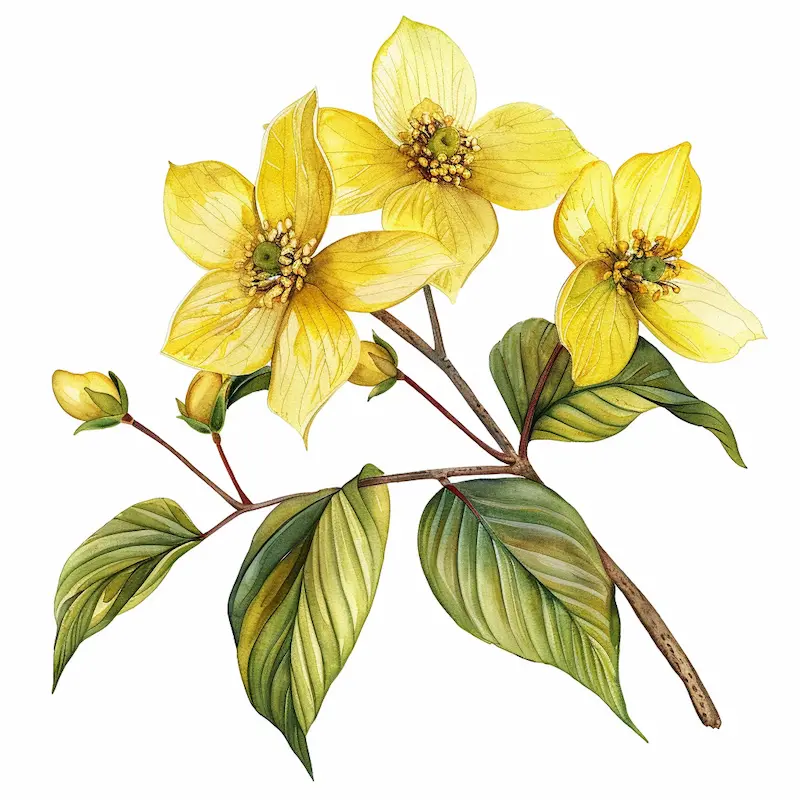
Cornelian cherry is one of the oldest cultivated plants in Ukraine. Archaeologists discover its pits at settlements of the Trypillian culture—evidence that people were eating cornelian cherry five thousand years ago. Today, it remains a constant presence in gardens throughout Podillia, the Carpathians, and Crimea, where wild cornelian cherry thickets adorning the hillsides are as familiar a sight as sunflower fields.
The defining feature of cornelian cherry is its remarkably early flowering. Tiny golden flowers appear in February and March, when snow still covers the ground and no other tree has even begun to awaken. At this moment, the bare branches of the cornelian cherry are suddenly clothed in a golden haze—a spectacle that leaves a lasting impression. For bees, this is a true lifeline: cornelian cherry provides the first spring nectar when nothing else is available.
Cornelian cherry fruits mature in August and September, containing more vitamin C than lemon. They are eaten fresh, made into jam and compotes, fermented into wine and liqueur, and dried for winter storage. Cornelian cherry jam has a distinctively tart flavour that cannot be confused with anything else. In traditional medicine, the fruits were used to treat digestive disorders, while the wood—extraordinarily hard and dense—was highly valued for crafting tool handles and walking sticks.
Cornelian cherry is a long-lived plant. Some specimens live for over two hundred years, gradually transforming from a shrub into a true tree. It is undemanding, tolerating drought and shade well, and is rarely affected by disease. The one thing worth knowing is patience with the first harvest—cornelian cherry begins fruiting 5–7 years after planting. However, those who wait never regret their patience.
Cornelian Cherry — planting & location
Blooms first among all shrubs, fruits are edible
How to water Cornelian Cherry
Prefers moist soil
Fertilizing and pruning: Cornelian Cherry
Remove dead branches