Flowering Weigela
At temperatures below –25°C the plant may suffer frost damage — protection is recommended in northern regions.
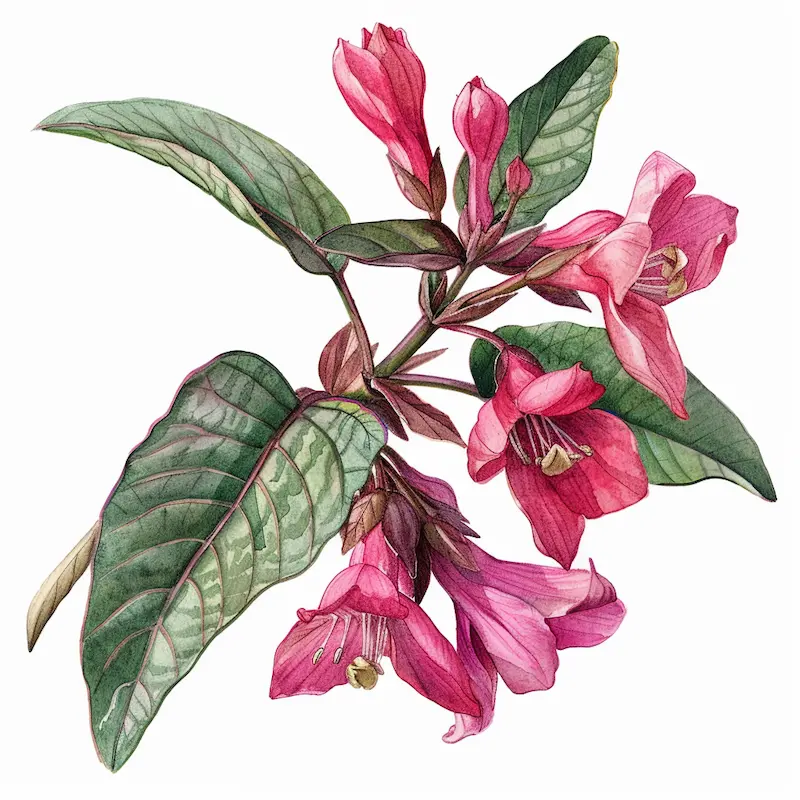
Flowering Weigela is one of the most beloved ornamental shrubs in Eastern European gardens, and quite deservedly so. This Chinese-Japanese beauty captured the hearts of European gardeners as far back as the nineteenth century, when it was first introduced to the continent. Since then, weigela has remained a symbol of spring's awakening, bestowing upon the garden an incomparable atmosphere of joy and freshness each May.
The shrub creates an impression of luxurious blooming: its delicate flowers, gathered in clusters, unfold in a palette ranging from soft pink to deep crimson, whilst certain varieties captivate with their snowy petals. The foliage is dark green and oval, forming a dense crown that appears neat even beyond the flowering season. Plant breeders have gifted us with numerous variations—from compact forms to elegant hybrids with contrasting foliage, allowing every gardener to select a plant after their own heart.
In the garden, weigela adapts swiftly both to the role of a striking focal point and to group compositions. It looks harmoniously in hedgerows, alongside spiraea and forsythia, and stands out beautifully as a sole lawn ornament. Blending effortlessly with other spring-flowering shrubs, weigela extends the blooming season and fills the space around one's home with living beauty.
This plant is the choice for those who value beauty without unnecessary effort. It is undemanding of soil, grows rapidly, and requires only moderate watering and minimal care. Should you dream of a garden bursting with flowers whilst other plants still slumber, flowering weigela shall be your most reliable companion.
Flowering Weigela — planting & location
Blooms on previous year's growth
How to water Flowering Weigela
Moderate watering
Fertilizing and pruning: Flowering Weigela
Remove spent branches and 1–2 old stems