Savin Juniper
Toxic—do not plant where children play, as the foliage and berries are poisonous.
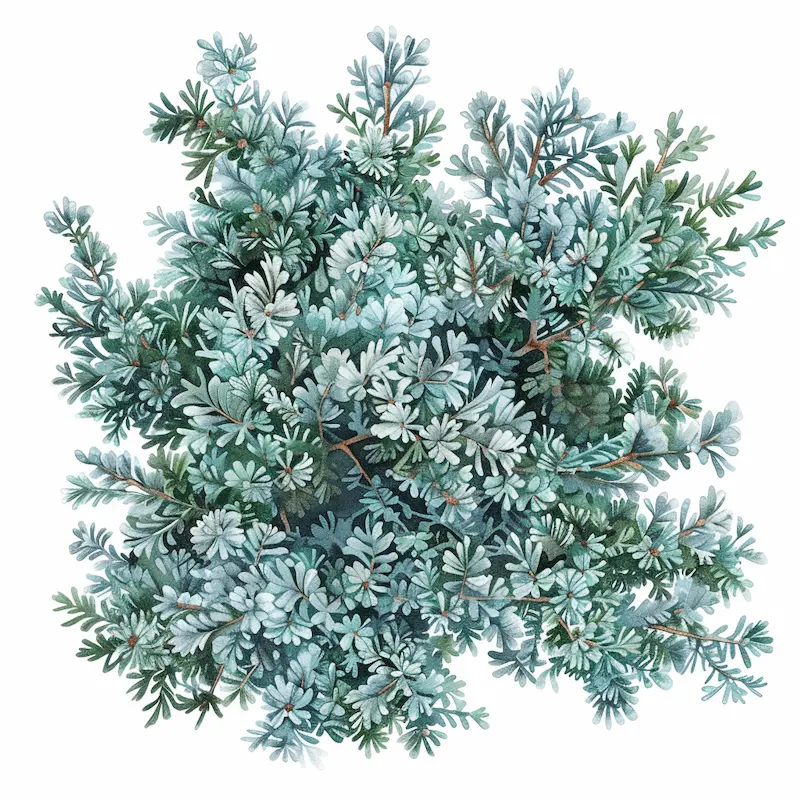
Savin Juniper is one of the least demanding conifers, having won the affection of gardeners worldwide through its hardiness and unassuming nature. This shrub originates from mountainous and sandy regions of Europe, Asia, and North Africa, where it has survived for centuries in the harshest conditions. Its name 'Savin' reflects a spirit of ruggedness and indomitability — the plant truly requires little attention to thrive comfortably in the garden.
Externally, Savin Juniper impresses with its compactness and density. The shrub forms a tight, often spreading shape with greyish-blue or dark green scale-like foliage that shines particularly beautifully in sunny locations. In nature, the plant grows predominantly horizontally, draping rocky slopes, but in cultivation, breeders have developed numerous interesting varieties — from dwarf groundcovers to compact pyramidal forms. Each form has its own character and finds its place in the garden.
In landscape design, Savin Juniper is a true universal plant. It fits wonderfully into alpine rockeries, creates a living frame for pathways, helps stabilise slopes, and adorns corners where other plants refuse to grow. It combines beautifully with other conifers, heathers, ornamental grasses, and stonework. Thanks to its resilient character, it becomes a reliable companion in gardens throughout Ukraine — from the warm south to the cold north.
Yet within all this charm lies one important secret: this shrub is toxic. Its foliage and dark berries contain poisonous substances, so before planting, give careful thought to placement — keep it away from areas where children play or pets roam. If this is taken into account, Savin Juniper will become an invaluable ornament to your garden for decades to come.
Savin Juniper — planting & location
Ground cover, evergreen, very hardy, TOXIC.
How to water Savin Juniper
Extremely drought tolerant.
Fertilizing and pruning: Savin Juniper
Remove dead branches only.