Common Juniper
Juniper berries are the primary component of gin and traditional folk remedies.
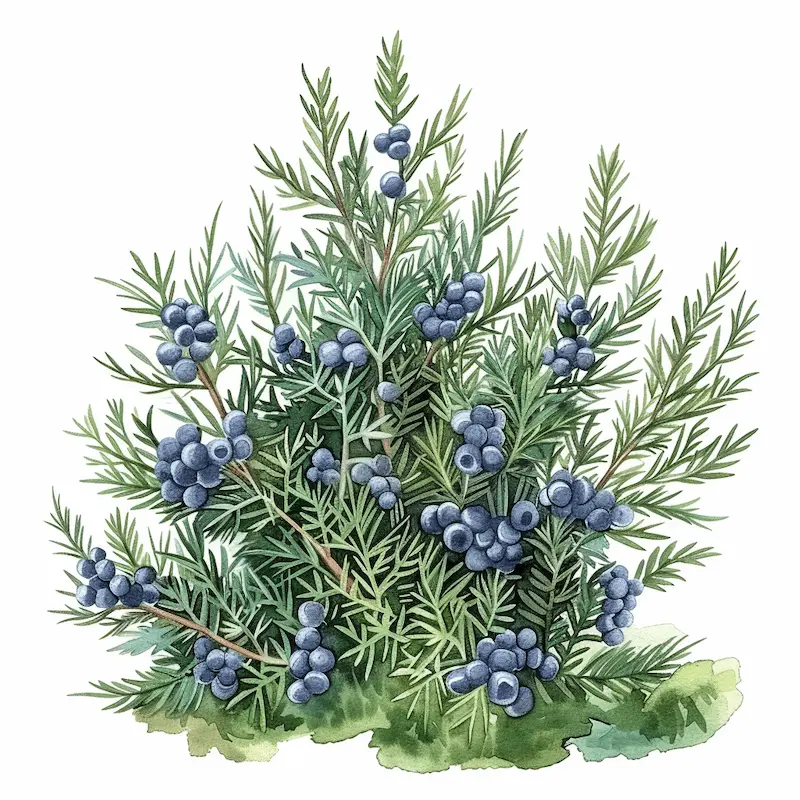
Common Juniper is one of the most ancient coniferous plants that has accompanied humanity for millennia. Native to the temperate and northern zones of the Northern Hemisphere, this undemanding wanderer inhabits everything from mountain plateaus to coastal sandy heathlands. Its popularity in ornamental gardening has grown thanks to its remarkable ability to adapt to the most severe conditions that reject most decorative plants.
A distinctive feature of Common Juniper is its incredible polymorphism: this plant can develop as a sprawling, low-growing shrub reaching just 30 centimetres in height, or as an elegant column up to 10 metres tall. Its foliage changes colour depending on the cultivar—from delicate green to bluish-silver or even golden. With such diversity of forms and colours, a gardener can select a variety for almost any garden composition, from an alpine rockery to a modern minimalist garden.
From a practical standpoint, Common Juniper is a treasure for those seeking an attractive garden without exhausting maintenance. The plant displays remarkable drought tolerance once established, requiring minimal watering and scarcely needing fertiliser. It can be combined with other conifers and deciduous plants, tolerates wind and freezing air with ease. In natural conditions, its fleshy berries become food for birds, making juniper a valuable ally in attracting wildlife to the garden.
If you have heard of gin and its mysterious notes, know this: these are precisely those berries! For centuries, they have served not only as the flavourful foundation of an elite spirit but also as a precious remedy in traditional medicine. Add to this the plant's remarkable frost hardiness and its tolerance of virtually any soil type—and you will understand why Common Juniper rightfully ranks among the indispensable plants for the Ukrainian garden.
Common Juniper — planting & location
Evergreen, coniferous, extremely variable in form.
How to water Common Juniper
Drought-tolerant once established.
Fertilizing and pruning: Common Juniper
Remove dead and diseased branches.