Mugo Pine
Naturally inhabits the Alps at heights of 2500–3000 m and is the hardiest form of pine.
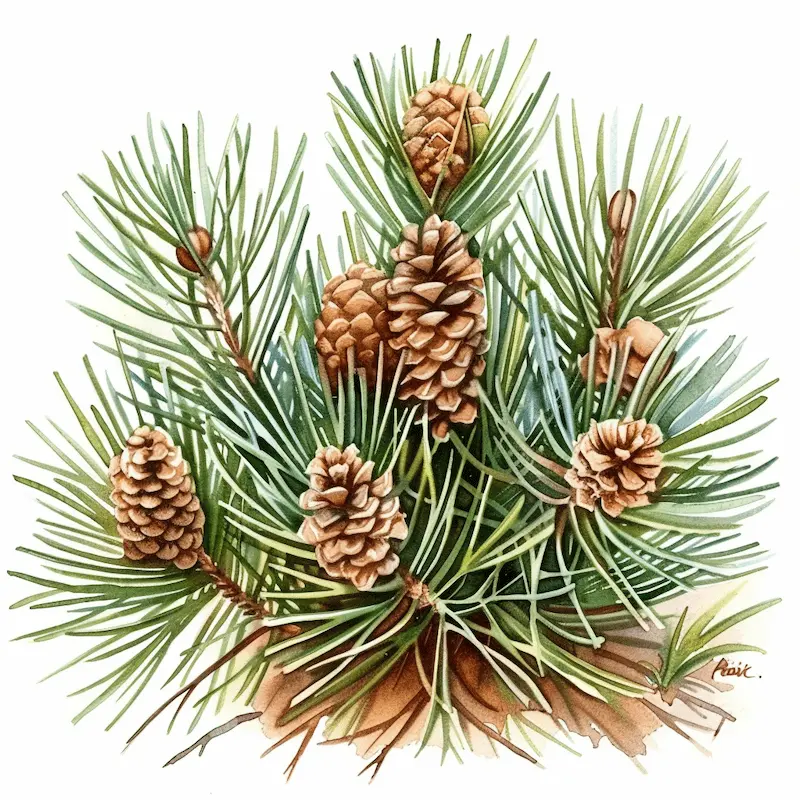
Mugo Pine is one of the most beloved conifers in European gardens, originating from the mountain ranges of the Alps, Carpathians, and Balkans. This hardy plant has long been valued by gardeners for its ability to survive in harsh high-altitude conditions and to adapt readily to cultivated settings. On lowlands, it reveals its full potential, remaining compact and neat without requiring extensive pruning.
The internally diverse mugo pine offers gardeners numerous options. Beyond the classic form with dense, cushion-like crown, there are cultivars with more spreading branch forms, brighter foliage coloration, or even dwarf forms that never exceed 0.5 metres in height. The needles are densely arranged, dark green, and retain their colour throughout the year, making the plant ornamental even in winter. Some cultivars take on an olive-bronze tint in sunlight—a natural phenomenon that simply adds to their charm.
In garden design, mugo pine plays the role of a versatile stalwart. It looks splendid on alpine rockeries alongside junipers and thujas, serves as an anchor in rock gardens, and adorns large containers on terraces and patios. On small plots, this pine allows you to create the atmosphere of a mountain landscape without demanding special care or frequent watering. Plant it once, and for twenty years it will reward you with its steadfast presence.
This plant truly deserves a place in every garden. Even a beginner can provide everything necessary for it to thrive: sun, good drainage, and minimal attention. Meanwhile, experienced gardeners will find in mugo pine a reliable foundation for more complex compositions, as it combines beautifully with any conifers and wild-growing plants.
Mugo Pine — planting & location
Evergreen, dwarf form, ideal for alpine rockeries.
How to water Mugo Pine
Drought-tolerant once established.
Fertilizing and pruning: Mugo Pine
Pinch back young candles by one-third to two-thirds of their length.