Tulip Tree
The tallest flowering tree in the United States, growing to heights of 55 m
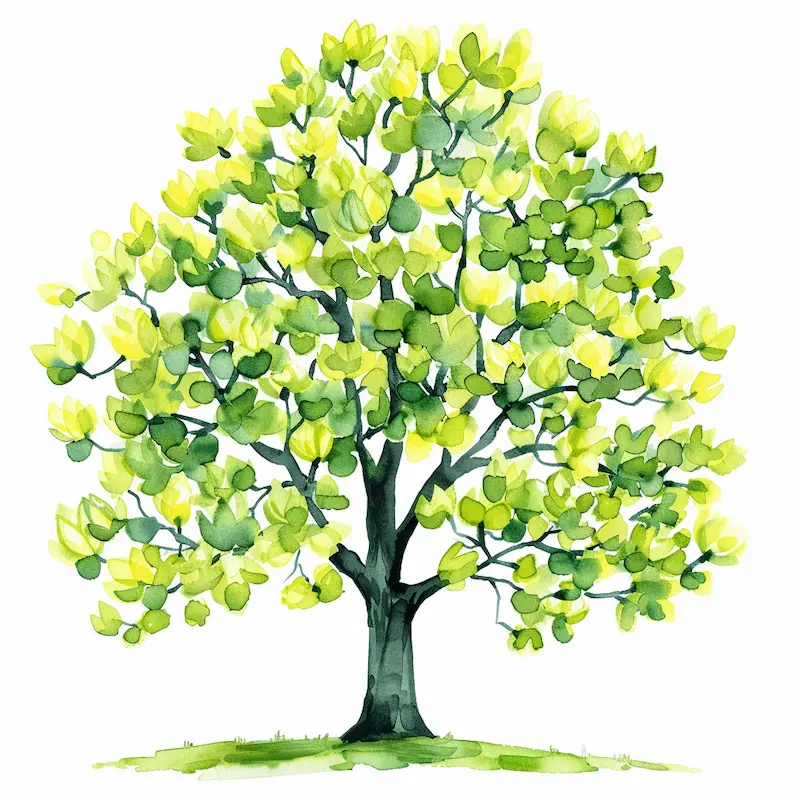
The Tulip Tree is a genuine marvel in the garden, if you are willing to wait for it. Hailing from the forests of North America, its magnificent trunks reach skyward. European gardeners fell in love with it as far back as the seventeenth century, and since then it has remained a symbol of elegance and natural beauty. Unlike most ornamental trees, Liriodendron combines not only extraordinary flowers but also distinctive foliage shaped like a violin or lyre—which is precisely why it bears such an evocative name.
The flowers of the Tulip Tree truly captivate: delicate and tulip-like, with soft yellow and orange hues, they unfurl from June through July. The foliage too plays a starring role—in autumn it transforms into an unforgettable golden colour. Modern gardeners can cultivate both traditional forms and more compact cultivars that suit medium-sized gardens well.
This tree is an ideal companion for magnolias, ginkgos, and weeping forms of rowan. In garden compositions, it serves as an architectural accent, drawing the eye in every season. It is best positioned in a sunny location with acidic soil—in such conditions, Liriodendron reveals its full potential. This tree is undemanding in care: moderate watering, minimal pruning, and few diseases. If you have space for a dream in your garden, the Tulip Tree awaits you.
Tulip Tree — planting & location
Unique lyre-shaped foliage, tulip-like flowers
How to water Tulip Tree
Sensitive to drying out
Fertilizing and pruning: Tulip Tree
Remove diseased branches only