Ginkgo
Ginkgo existed 270 million years ago—it survived the dinosaurs and the nuclear explosion in Hiroshima.
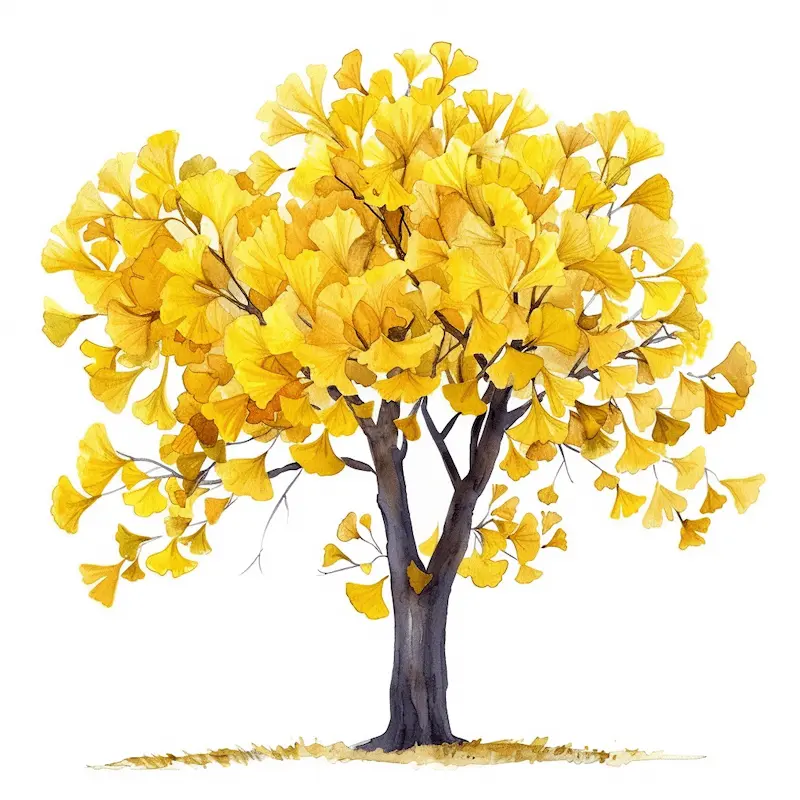
Ginkgo biloba is one of the oldest cultivated plants on Earth, originating from China and Japan. This relict tree has existed for over 270 million years, and its evolution has come to a standstill, as though a forgotten page from the planet's ancient history. In gardens, it is valued not only as a living museum specimen but also as a true visual gem that delivers unforgettable impressions throughout the year.
Externally, ginkgo captivates with its graceful character: branching limbs bear unique fan-shaped leaves found nowhere else in the plant kingdom. In spring, the tree dons a delicate light green, in summer it offers a deep emerald hue, and in autumn it transforms into a golden torch—a phenomenon worth witnessing at least once in a lifetime. Flowering in April remains inconspicuous, yet the fragrance of blooming ginkgo is a matter unto itself, lingering long in memory.
In the garden, ginkgo harmonises beautifully with Japanese maple, birch, and mountain pine, creating compositions that appear precious and refined. This undemanding plant thrives in sunny locations, tolerates moderate watering, and adapts to any soil type. Ginkgo suits both expansive park spaces and modest gardens—it all depends on your imagination.
Interestingly, ginkgo is one of the few trees that survived the nuclear explosion in Hiroshima. Its leaves are renowned for their medicinal properties in traditional medicine and are well known as an effective remedy. If you seek a tree that combines history, beauty, and practicality, ginkgo is your choice.
Ginkgo — planting & location
Relict tree; foliage turns bright yellow in autumn; leaves are valued for medicinal properties
How to water Ginkgo
Mature specimens are drought-tolerant
Fertilizing and pruning: Ginkgo
Remove only dead and diseased branches