Kobus Magnolia
The first flower crop in Kobus appears after 30–40 years (the longest among magnolias).
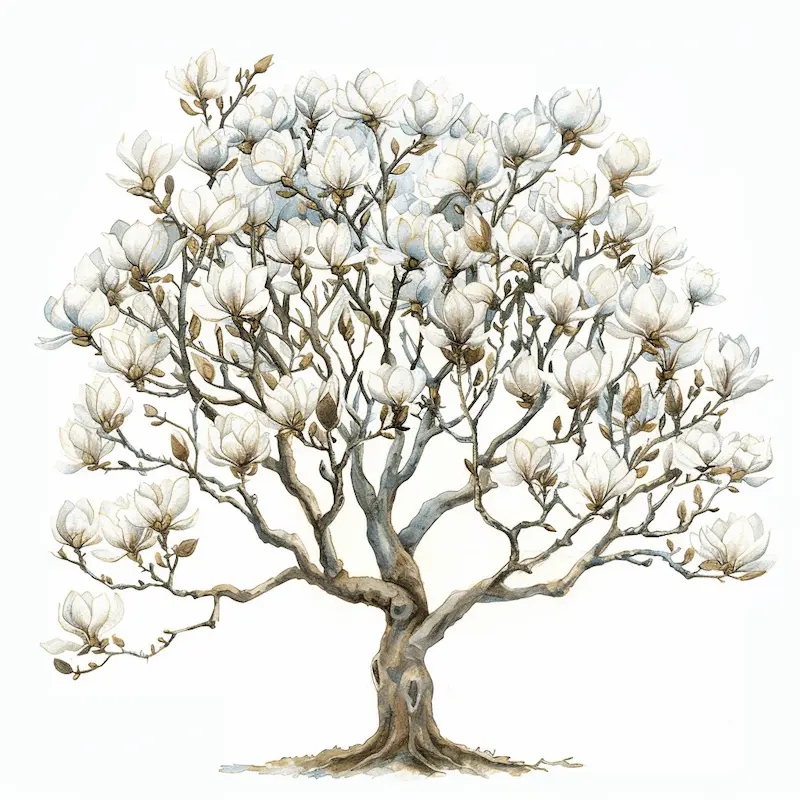
Kobus Magnolia is one of the oldest cultivated magnolias, originating from the forests of Japan and Korea. This species was honoured to be named after the Dutch botanist J.Z. Kobus and has captivated gardeners worldwide for centuries with its incomparable spring flowering beauty.
The tree conveys an impression of elegance: its large white flowers with a delicate fragrance bloom on bare branches in April, before the leaves appear. This spectacle is so enchanting that the Japanese consider magnolia a symbol of purity and perfection. The foliage appears later and forms a beautiful dense crown that changes colour from light green in summer to golden in autumn. Unlike many cultivated magnolia varieties, Kobus stands out for its exceptional cold hardiness, making it a reliable choice for Ukrainian gardens.
This magnolia deserves the most honourable place in the garden—either as the main focal point of a park composition or the principal ornament of a private estate. It looks magnificent in solitary planting on a lawn but also harmonises beautifully with star magnolia, Japanese cherry, and ginkgo. Around the tree, you can plant spring ephemerals—scilla, crocus, or snowdrop—to extend the spring flowering period.
Waiting for the first flowers of Kobus is indeed a patient game of nature: the first crop of white flowers appears 30–40 years after planting, making this species the slowest-growing among magnolias. Yet this very fact essentially makes it a symbol of longevity and wisdom, as the tree you plant will bloom for your children and grandchildren. If you seek a plant with deep history and reliable beauty, Kobus Magnolia is the choice that will never disappoint.
Kobus Magnolia — planting & location
Hardier than Soulange Magnolia, produces large trees.
How to water Kobus Magnolia
Do not allow the soil to dry out completely.
Fertilizing and pruning: Kobus Magnolia
Remove only dead branches.