English Yew
All parts of the yew (except the berry flesh) are deadly poisonous. It can live for over 4,000 years!
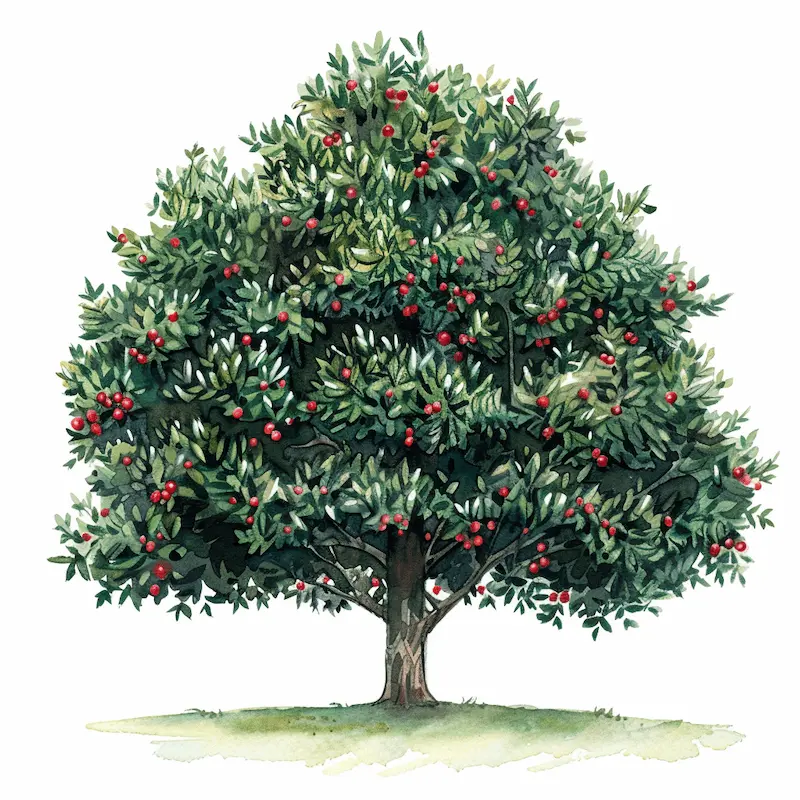
Common Yew is one of Europe's oldest ornamental plants, accompanying humanity for over four millennia. Native to the temperate zone of Eurasia, it adapts readily to conditions in Ukrainian gardens regardless of region. This undemanding plant has become a symbol of longevity and wisdom in many cultures, and in England it is often planted near churches, where it grows for centuries.
Common Yew impresses with its elegance: a dense crown of soft needles with dark green colouring contrasts beautifully with bright red berry-like fruits (called arils), which appear in autumn on female specimens. There are many interesting cultivars—from compact forms for small gardens to magnificent trees that form unique silhouettes. Yew lives extremely long, gradually developing a massive trunk that is often the thickest among conifers.
In the garden, Common Yew is universally useful: it works beautifully for hedges, topiary compositions, and specimen plantings. It can be combined with box, juniper and thuja, creating classical landscapes. The plant is undemanding about soil and develops equally well in sunny and shaded locations, requiring only moderate watering.
However, remember: ALL parts of yew are deadly poisonous—from needles to bark, except for the red flesh of the berry. This makes it unsuitable for gardens with small children or pets. If you have no such limitations, Common Yew is an investment in your garden's future for centuries to come.
English Yew — planting & location
Evergreen, thickest trunk among conifers, HIGHLY toxic
How to water English Yew
Moderate watering
Fertilizing and pruning: English Yew
Holds shape excellently for hedges or topiary