Common Box
Box wood can live for 600 years—the longest-lived among deciduous shrubs in Europe.
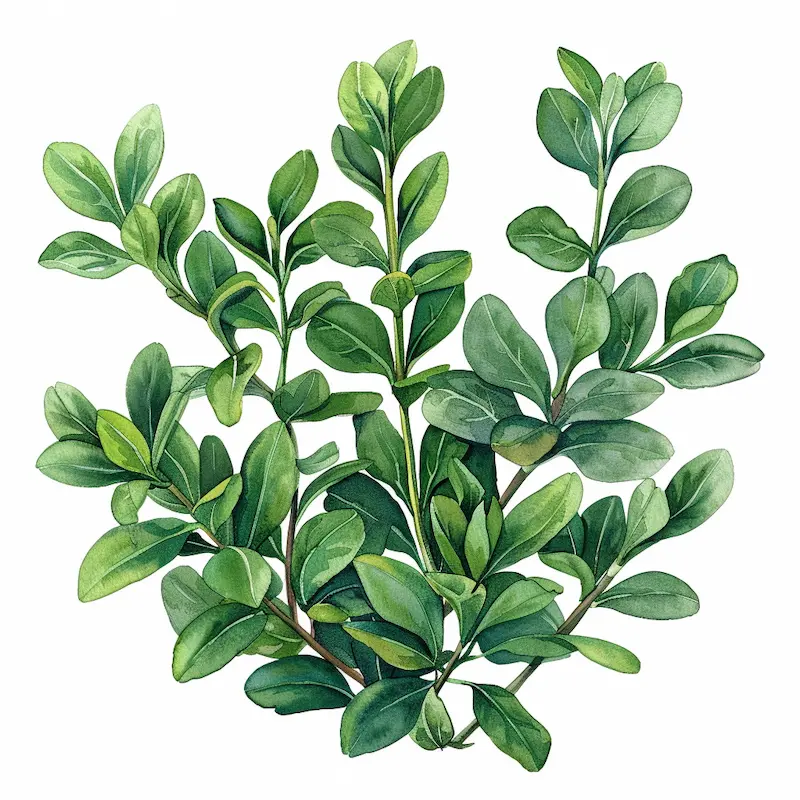
Common Box is one of the oldest ornamental plants in European gardens, having accompanied humanity for over two thousand years. Native to Southern Europe, Western Asia, and North Africa, it has established itself reliably throughout Ukraine. This compact evergreen shrub features dense, glossy foliage of deep green colour, retaining its beauty even through harsh winter months. Small, inconspicuous flowers appear in April, but the true appeal of Common Box lies in its remarkable ability to hold its imposed shape for extended periods after pruning.
The popularity of Common Box among gardeners stems from its versatility. Numerous cultivars exist, ranging from tiny spherical forms for alpine rockeries to elegant pyramidal and columnar varieties. The rich green foliage remains attractive throughout the year, and consistent clipping allows for the creation of refined topiary compositions, geometric shapes, and living hedges. This undemanding plant thrives in partial shade and full shade, making it indispensable for gardens beneath tree canopies, where many other plants simply cannot survive.
In the garden, Common Box plays the role of a stable, reliable performer. It combines beautifully with spiraea, thuja, and juniper, creating striking compositions and enhancing the beauty of neighbouring plants. Common Box is particularly valued in the central, western, and southern regions of Ukraine, where the climate favours its growth.
Throughout many European gardens, specimens of Common Box can be found that are over 600 years old. This makes it a cherished favourite for any gardener who values tradition, resilience, and timeless beauty. If you seek a plant that will unite generations of gardeners in your family, Common Box is an excellent choice.
Common Box — planting & location
Evergreen, ideal for topiary forms
How to water Common Box
Does not tolerate waterlogging
Fertilizing and pruning: Common Box
Trim to maintain shape 2–3 times per year