Blackthorn
Among Cossacks, blackthorn infused with vodka—known as 'ternovka'—is a traditional recipe from the era of the Hetmanate.
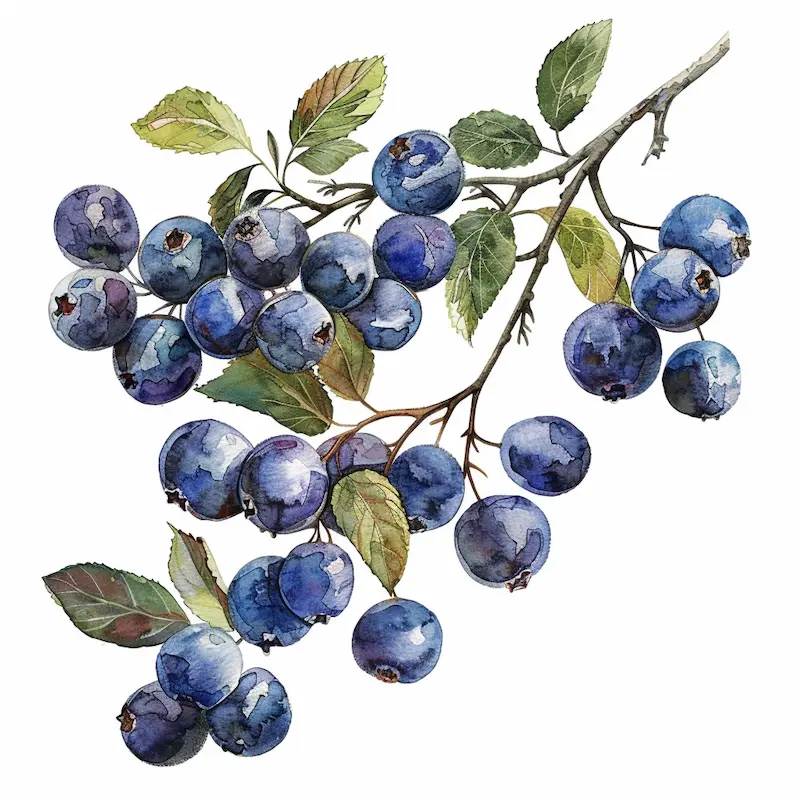
Blackthorn is one of the oldest fruit-bearing plants in European flora, growing wild in Ukrainian territories long before human settlement. This remarkable shrub, native to Europe and Western Asia, has been utilised for thousands of years both as a food source and for garden protection. In spring, blackthorn becomes covered with pure white blossoms that appear before the leaves, creating an enchanting display in the garden, whilst in autumn the branches are adorned with blue-black berries that develop their true flavour only after the first frost.
This is an extraordinary plant in its structure: sharp thorns run through the branches, making blackthorn an excellent hedging plant and natural protective barrier. The shrub is easily recognised by its dark bark and compact crown, which gains particular architectural beauty with age. Blackthorn is remarkably undemanding regarding soil and location, although it is most often planted in sunny areas where it develops most vigorously.
In the garden, blackthorn combines perfectly with other wild berry-bearing shrubs—wild rose, hawthorn and sea buckthorn—creating an authentic corner of nature. Many gardeners value this plant particularly for its multifunctionality: as a hedge, nectar source, source of vitamins, and decorative landscape element. Few know that among the Cossacks, blackthorn held special significance: berries were infused with spirits to make the popular tincture 'ternovka'—a drink that has survived to the present day as a legacy from the Cossack era. If you are seeking a plant that will work for you throughout the entire season—from spring blossoms to autumn harvests—blackthorn is precisely what you need.
Blackthorn — planting & location
Berries are edible after frost; suitable for infusions
How to water Blackthorn
Drought-tolerant
Fertilizing and pruning: Blackthorn
Remove dead branches and control sucker growth