Snowberry
The berries are poisonous to humans but edible for birds.
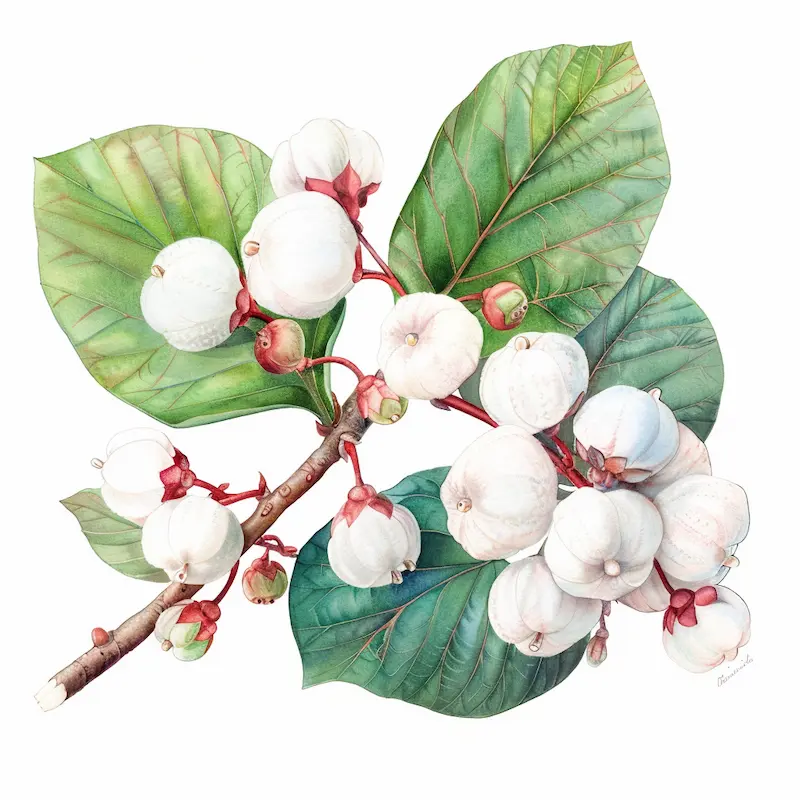
Snowberry is one of the most undemanding ornamental shrubs for shady corners of the garden. This North American plant gained popularity in Europe during the nineteenth century thanks to its resilience and ability to thrive where other shrubs refuse to grow. The shrub is cultivated primarily for its unusual white berries, which resemble small snowballs—hence its poetic name.
Outwardly, snowberry appears modest: the foliage is small, oval, and greyish-green, whilst the flowers are delicate, pinkish-white, blooming throughout summer. The real magic begins in autumn, when dense clusters of pinkish-white berries appear in place of the flowers, gradually becoming pure white and persisting on the branches until spring. There are also varieties with pink and red berries, but the classic white snow remains the most popular.
In the garden, snowberry finds its place primarily in dark, difficult-to-cultivate locations—beneath trees, along the south side of buildings, and in deep shade. Unlike most ornamental shrubs, it does not complain about shade; conversely, in bright sunlight it sometimes appears less attractive. It combines beautifully with dogwood, viburnum, and barberry, creating striking autumn and winter compositions.
An interesting fact: the white berries of snowberry are poisonous to humans but edible for birds, particularly during hungry winter days. If your garden is visited by thrushes, sparrows, and other birds, snowberry becomes a true lifesaver for them. This is precisely why this plant deserves a place in every ecological garden, where not only flowers bloom but living nature thrives.
Snowberry — planting & location
Ornamental white berries persist throughout winter.
How to water Snowberry
Thrives in shade with moderate watering.
Fertilizing and pruning: Snowberry
Remove old and damaged branches.