Japanese Barberry
The berries are edible and are used for making sauces and jam.
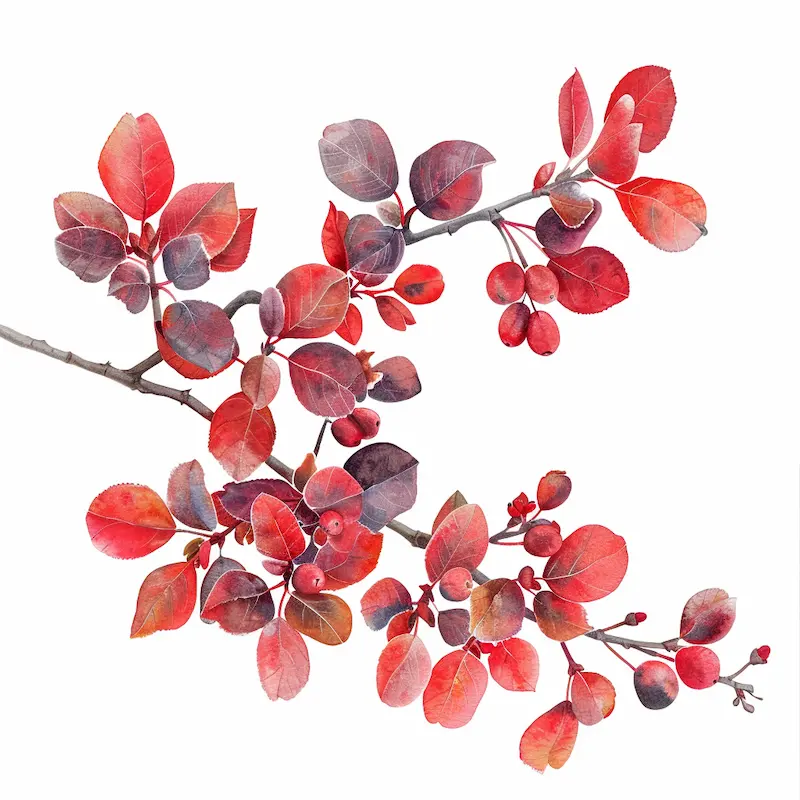
Japanese Barberry is a Japanese shrub that has captivated gardeners worldwide with its remarkable hardiness and vibrant appearance. Its native home is Honshu Island, from where it spread into European horticulture in the nineteenth century and became one of the most popular ornamental plants, equally welcome in a modest cottage garden and in a luxurious park.
The beauty of Japanese Barberry unfolds gradually throughout the season. In spring, delicate yellow flowers (April–May) bloom subtly fragrant and integrate naturally into garden compositions. The true magic begins in autumn, when foliage blazes with crimson, gold, and orange—the shades depending on the cultivar. Plant breeders have developed wonderful varieties with striking purple, red, or golden leaves that persist considerably longer than those of the wild species. In winter, bright red berries adorn the branches, resembling tiny rubies and creating a striking, almost theatrical effect in the winter garden.
This shrub is a genuine find for practical gardeners. Japanese Barberry thrives equally well in full sun and partial shade, requires infrequent watering, and tolerates drought well once established. It responds excellently to pruning, combines beautifully with spiraea, meadowsweet, and box in compositions of various styles. Moreover, the tart berries are suitable for preparing distinctive sauces and preserves that add unusual sharpness to dishes.
If you seek a plant recognizable by its sharp thorns and bright berries even in the depths of winter, Japanese Barberry is an ideal choice for any garden, regardless of style or size. It is one of those shrubs that 'works' throughout the entire year.
Japanese Barberry — planting & location
Ornamental autumn foliage, thorny stems, red berries.
How to water Japanese Barberry
Drought-tolerant once established.
Fertilizing and pruning: Japanese Barberry
Prune to maintain desired shrub shape.