Shasta Daisy
Traditionally popular for the 'loves me, loves me not' petal-plucking game
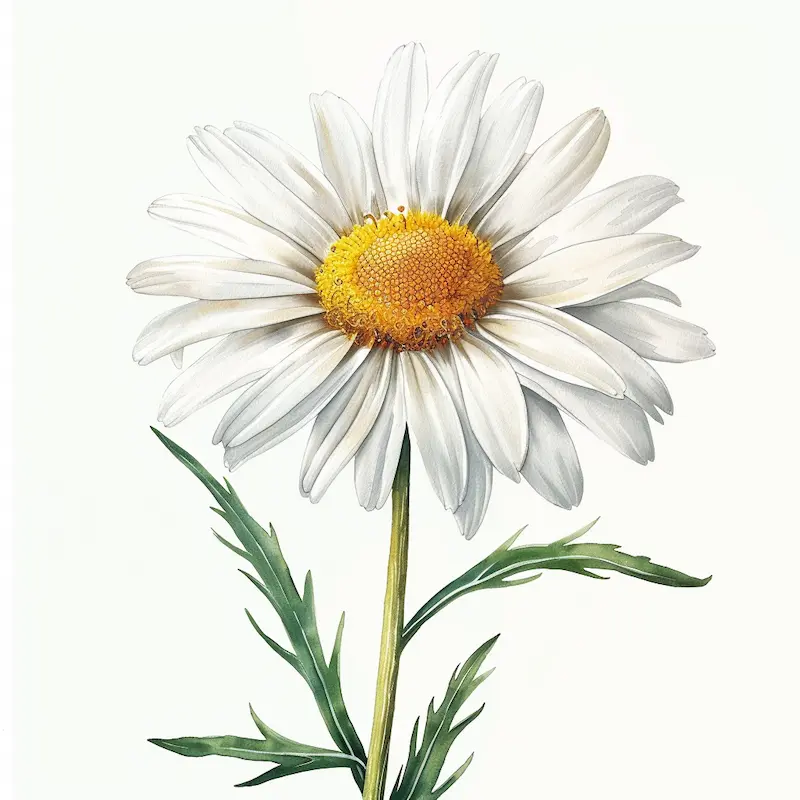
Shasta Daisy is one of the most beloved flowers in gardens worldwide, and for good reason. This hybrid originates from crossing several ox-eye daisy species and was named after Mount Shasta in California, where it was first cultivated in the early twentieth century. Since then, the plant has won the hearts of gardeners with its undemanding nature and generous blooms.
Externally, Shasta Daisy exemplifies true classicism: pure white petals arranged around a golden centre, on sturdy upright stems. The plant reaches 0.5–1 metre in height, making it ideal for both front borders and cutting gardens. Over decades of breeding, numerous cultivars have been developed, ranging from simple classic forms to fully and semi-double varieties, some featuring charming cream or yellowish tones. Yet the simple garden form reveals the greatest beauty—pure, bright, like a ray of sunshine in a bouquet.
In the garden, Shasta Daisy proves demanding of just one condition: bright sunlight. In a sunny spot, it blooms so profusely that foliage is barely visible beneath a cloud of white flowers. The plant holds beautifully in floral arrangements, which is why many gardeners cultivate it specifically for cutting. With regular deadheading, flowering extends from June through August and beyond until the first frosts. Its simplicity makes it perfect for beginners, whilst its long flowering period endears it to experienced gardeners.
Associated with the childhood guessing game 'loves me, loves me not', but plant this flower in your garden and it will certainly return your affection. A truly universal flower that makes any border brighter and more cheerful with its simple presence.
Shasta Daisy — planting & location
Extended flowering period with regular deadheading
How to water Shasta Daisy
Divide clumps every 3 years
Fertilizing and pruning: Shasta Daisy
Remove spent flower stems; cut back foliage in autumn