Delphinium
Toxic to humans and animals if ingested.
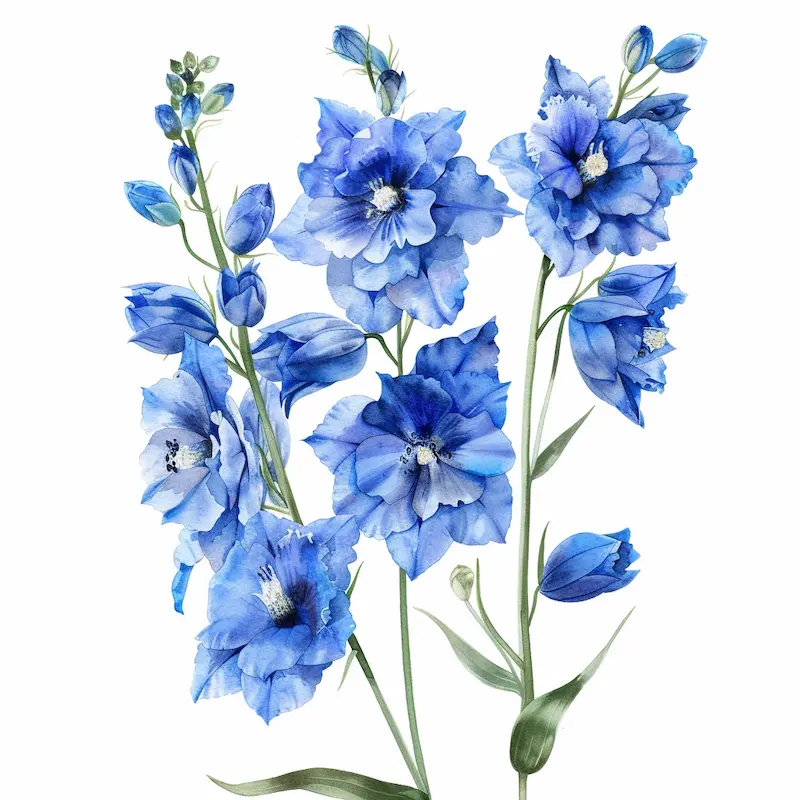
Delphinium is the queen of any summer garden, and for good reason. When its first flower spikes unfurl in early June, they create an impression of pure enchantment: deep blue and violet tones, sometimes with white or pink brushstrokes, rise skyward for a metre or two, like candles at a grand celebration. Native to the mountainous regions of Europe and Asia, where it grew in meadows on sunny slopes, delphinium has inherited a love of light and a certain nobility from its native habitat. Its name derives from the Greek word for "dolphin" — the bud shapes indeed resemble the profile of this creature.
Most cultivated delphinium varieties we grow today are the result of selective breeding undertaken by English and German gardeners in the nineteenth century. Now we have at our disposal wonderful hybrids with double flowers and compact forms for urban borders, or impressive specimens for large flower gardens. The florets are densely arranged along tall inflorescences, creating a truly spectacular display. From June through August, delphinium is among the most conspicuous inhabitants of the garden — visible from afar, it catches the eye and becomes the natural focal point of any composition.
In the garden, delphinium is an indispensable character when creating romantic English style. It is often planted at the back of borders, along fences or near entrance arbours. The tall plant adds verticality and architectural interest, counterbalancing the spreading forms of roses and lavender. Delphinium loves sunny positions and moderate soil moisture — it tolerates neither drought nor waterlogging. This is a plant for attentive gardeners willing to provide it with light support and regular feeding. It is precisely such attention that makes it even more valuable: a plant demanding care often repays us with the greatest beauty.
Delphinium — planting & location
Repeat flowering is possible after pruning.
How to water Delphinium
Stake or tie to supports when height exceeds 1 m.
Fertilizing and pruning: Delphinium
Cut flower spikes after blooming; remove foliage in autumn.