Perennial Lupine
Lupine roots form a symbiosis with nitrogen-fixing bacteria
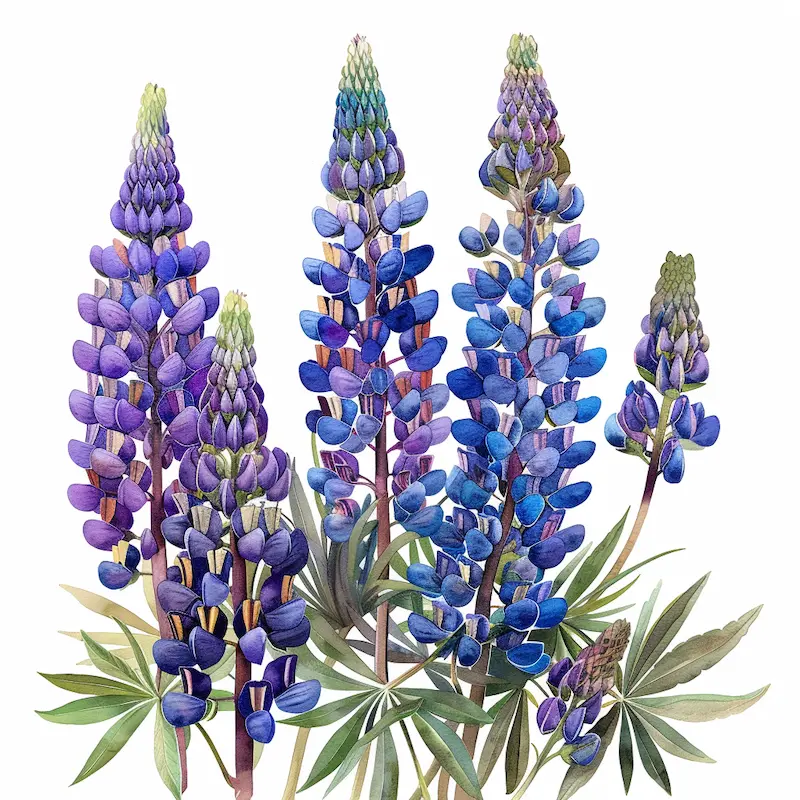
Perennial lupine is one of the most beloved plants among gardeners who wish to bring genuine summer brilliance to their flower beds. This enchanting creation originates from the north-western region of North America, where it grew on moist meadows and clearings. Over the course of a century, lupine won the hearts of European gardeners, especially the British, who regarded it as an indispensable helper in creating picturesque park compositions. Today, this plant has embellished flower beds from the Atlantic to Japan.
Immediately striking are the sturdy vertical flower spikes densely arranged with tiny blooms that unfold from base to apex. This creates the impression of a compressed mountain peak bathed in paint. The colour palette is impressive: from pure white and pale yellow to rich blue, purple, and red tones. Plant breeders continually develop new hybrid varieties, proudly named after Europe's most renowned gardens—the 'Russell' series remains an enduring favourite among gardeners. The lupine's feathery divided foliage is itself sufficiently ornamental and creates an attractive backdrop even after flowering.
This plant is the dream of all those who wish to fill their garden with colour without intensive horticultural intervention. Lupine performs beautifully in mixed borders alongside other perennials, attracting attention through its majesty and nobility. In cut flower arrangements, lupine creates a stunning effect, playing the role of principal soloist in floral compositions.
Yet the most enchanting characteristic of lupine is visible only to the microscopic eye—its roots invite microscopic helpers that draw precious nitrogen directly from the air, dissolving and enriching the soil. This means that lupine is not merely a beautiful garden ornament, but also an active improver of the earth that surrounds it. After lupine, the soil becomes more fertile, establishing a solid foundation for any neighbouring plants.
Perennial Lupine — planting & location
Fixes atmospheric nitrogen and improves soil quality
How to water Perennial Lupine
Dislikes alkaline soil
Fertilizing and pruning: Perennial Lupine
Deadhead flower spikes to encourage repeat flowering