Common Mallow
References to hollyhock appear in Egyptian papyri dating back 3,000 years
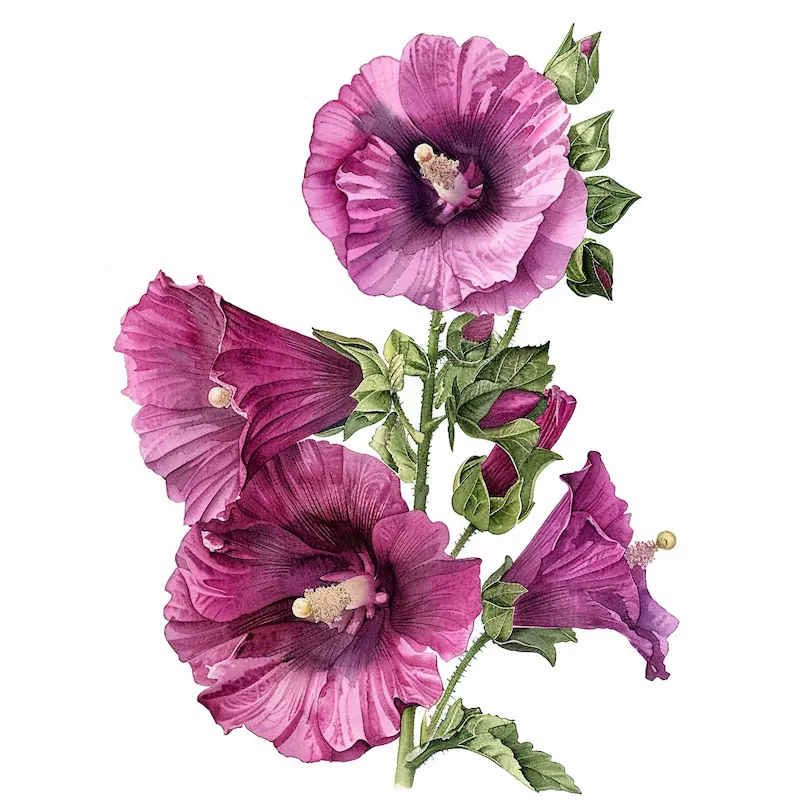
Hollyhock is a beloved garden favourite with a history spanning centuries, originating from the warm lands of the Near East and Mediterranean region. Even in ancient Egyptian times, people marvelled at hollyhock flowers, and later it made its way into European monastery gardens, where it was cultivated as both a medicinal and ornamental plant. Today, this magnificent plant has naturalised throughout the world and become an integral part of romantic gardens.
Recognising a hollyhock in bloom is impossible to miss—tall, spreading stems are crowned with dense spires of flowers at the height of summer. Petals can be delicately pink, deep red, pure white, or golden yellow, and modern cultivars often display stunning colour combinations and double forms. The plant grows into a veritable wall reaching up to three metres tall, making it ideal for screening the back of borders or concealing unsightly corners of the garden.
In landscape design, hollyhock plays the role of true royalty—it captivates the eye and takes one's breath away. Gardeners prize it for its undemanding nature regarding soil and minimal care requirements. Plant it in a sunny location, provide moderate watering during dry spells, and it will bloom generously from June until late autumn. Hollyhock self-seeds readily, making it self-renewing and returning to your garden year after year.
There is something profoundly magical about this plant—it is deeply rooted in folk culture and garden romance. When you gaze upon the spike of vibrant flowers, you seem to touch history itself, intricately woven with human hands and memories. This is precisely why hollyhock deserves a place in every garden that aspires to have a soul.
Common Mallow — planting & location
Biennial or perennial, self-seeds freely
How to water Common Mallow
Stake or tie to protect from wind
Fertilizing and pruning: Common Mallow
Remove after flowering