Creeping Phlox
Forms continuous flowering carpets in spring — like a 'blooming rock'
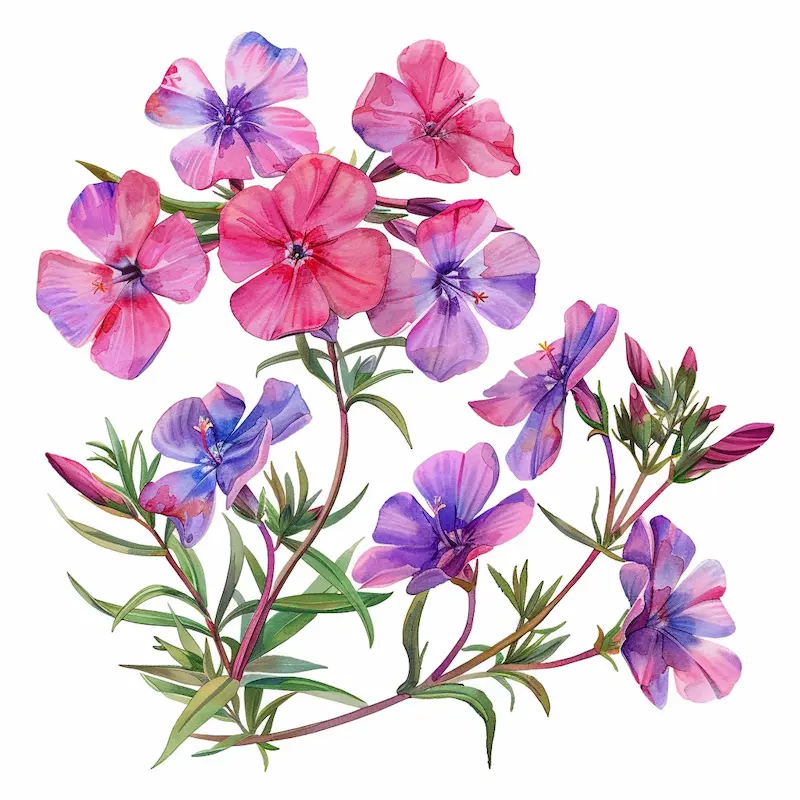
Creeping Phlox is one of the most popular flowering ground covers for sunny garden areas. This North American beauty has gradually won the hearts of gardeners worldwide thanks to its undemanding nature and remarkable abundance of flowers. Year after year, the plant becomes fuller, and in spring it transforms into a genuine carpet of blooming buds that looks from a distance like a living mosaic panel.
Tiny needle-like leaves of phlox remain on the stems throughout the year, forming dense evergreen mats just 5–15 centimetres tall. From April to May, the plant produces countless small five-petalled flowers in white, delicate pink, crimson, lilac, and bicolour varieties. Breeders have developed dozens of cultivars, from the classic 'Candy Stripe' with a contrasting eye at the centre to the deep purple 'Emerald Pink Blue Eyes' or pure white 'White Delight'.
In the garden, Creeping Phlox is a universal workhorse: it adorns rocky slopes, verdantly frames border fronts, suppresses weeds, and holds soil on hillsides. It can be planted in large groups for a striking spring display or scattered among other perennials to create a natural spreading effect. The plant thrives beautifully in containers on balconies or terraces.
It is a true modest performer that requires only sunlight, well-drained soil, and minimal attention after establishment. The drought tolerance of phlox is legendary — plant it and forget it. Even in the driest years, it remains green and flowering whilst other ground covers succumb to heat stress. This very quality has earned it a place in every garden where the gardener values beauty without fuss.
Creeping Phlox — planting & location
Ground cover, evergreen, spreading habit
How to water Creeping Phlox
Drought-tolerant once established
Fertilizing and pruning: Creeping Phlox
Trim back by one-third after flowering to promote bushiness