Daffodil
Daffodils should not be placed with other cut flowers in a vase as they release toxins.
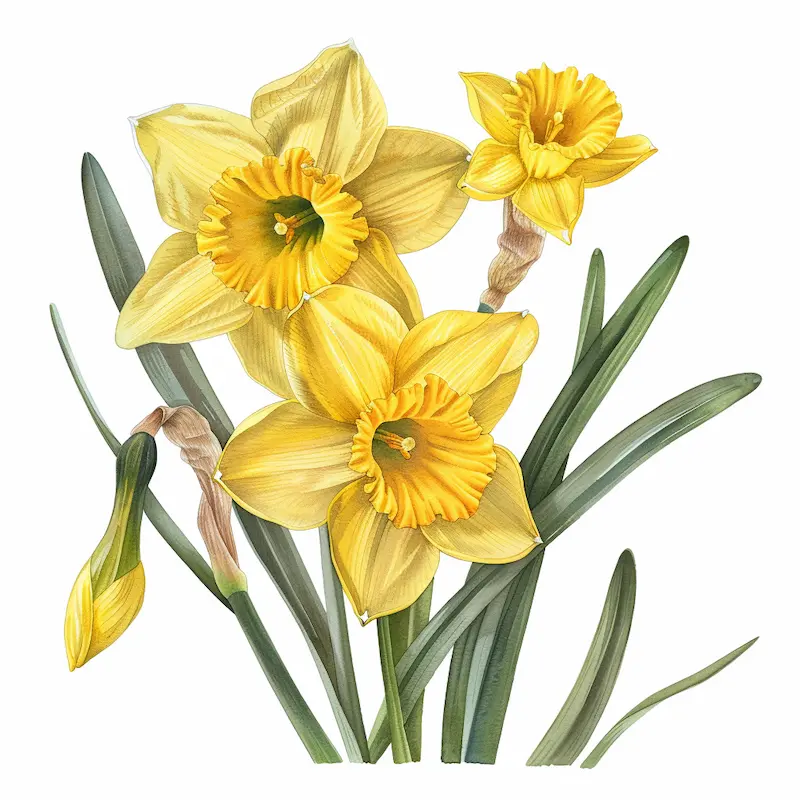
The daffodil is one of the most beloved early spring plants, bringing the first joy to gardens after a long winter. This colourful perennial originates from the Pyrenees and Western Europe, where it has grown in natural conditions for many centuries. Cultivated by humankind for over five hundred years, it has become a symbol of spring in many cultures, and in Ukrainian villages it is also called the "golden bell".
The daffodil is easily recognised by its characteristic flower structure: a yellow, white or cream perianth surrounded by a trumpet-shaped corona that appears extraordinarily elegant. There are many varieties, ranging from classic bright yellow blooms to delicate bicoloured forms with white petals and yellow centres. Each bulb produces several flowers annually, arranged singly or in clusters depending on the variety, flowering from April to May and providing an incomparable fragrance.
In the garden, the daffodil is a versatile helper for spring displays. It looks splendid in groups across lawns, beneath trees and shrubs, in rock gardens and mixed borders. The plant is undemanding of growing conditions, thriving equally well in sunny locations and partial shade. In spring during emergence, it benefits from nitrogen fertilisation, and after flowering, it is best to leave the foliage on the plant until natural yellowing occurs, allowing the bulb to accumulate nutrients for the next season.
An interesting fact: the daffodil secretes a poisonous sap, so it should never be placed in a vase with other flowers, as they will quickly wilt. However, for rodents, this plant serves as a natural deterrent, making the bulbs perfectly safe to plant in areas where moles and mice may cause damage. If you have not yet placed this enchanting flower in your garden, now is the time to do so!
Daffodil — planting & location
Bulbous plant, toxic to rodents.
How to water Daffodil
Reduce watering after flowering.
Fertilizing and pruning: Daffodil
Cut back foliage after it yellows.