Hyacinth
Hyacinth fragrance is used in Chanel and Dior perfumery
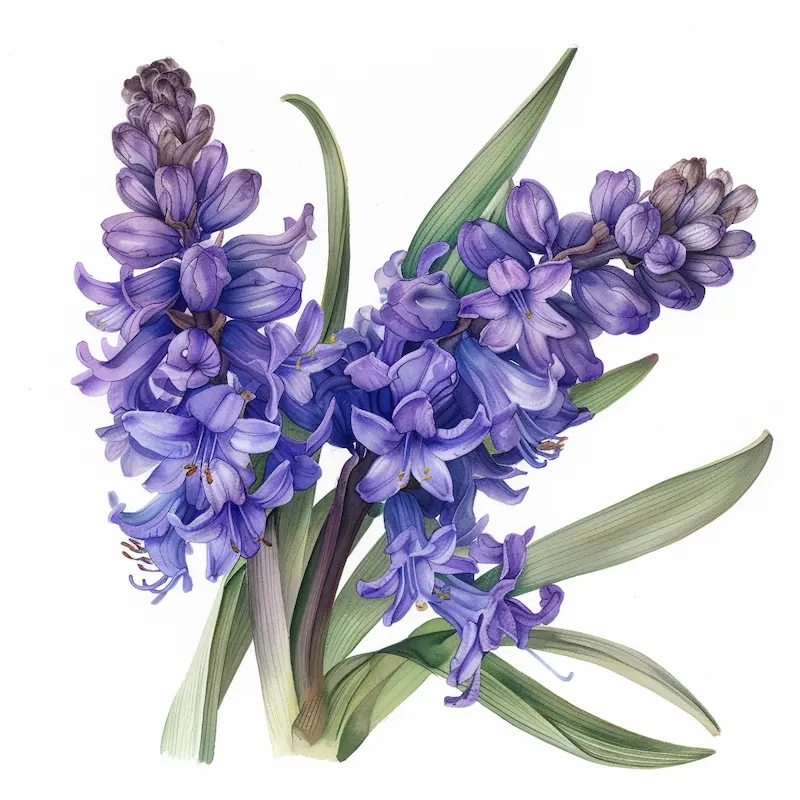
The Oriental Hyacinth is that beloved spring bulb which captivates with its dense, honey-like fragrance and tight flower spikes. Native to the Eastern Mediterranean and Western Asia, this plant has been selectively bred for centuries to create a vast palette of varieties. Today, gardeners can choose between classic blues and pinks, as well as charming whites and yellows—each with its own magic and distinctive character.
Physically, the hyacinth is a compact, elegant plant with linear leaves and a wonderfully cylindrical spike of densely packed flowers on the stem. Modern garden varieties are often double or semi-double, with larger and more delicate petals. A single bulb can produce several flower stems—particularly noticeable in the most popular varieties, bred specifically for garden collections. From planting the bulb to the first flower takes just a few months of cold period, which is why hyacinths so love early spring.
In the garden, the hyacinth plays the role of a true revolutionary: plant it in clusters near doorways, in mixed borders, or in flower beds alongside tulips and daffodils. Yet this charming flower doesn't necessarily need soil—many gardeners prefer to grow bulbs in water on a windowsill, observing the development of living wonder in real time. This experience is particularly valuable for children.
Interesting fact: the delicate fragrance of hyacinth has long been beloved by perfumers worldwide—its tart, slightly spicy notes are included in the legendary fragrances Chanel and Dior. This means that in your garden blooms not simply a flower, but a genuine perfume masterpiece. Absolutely worth trying!
Hyacinth — planting & location
Bulbous, can be grown in water
How to water Hyacinth
Avoid waterlogging
Fertilizing and pruning: Hyacinth
Cut back foliage after yellowing