Grape Hyacinth
The name derives from the Greek 'musk' — muscus — referring to its musky fragrance.
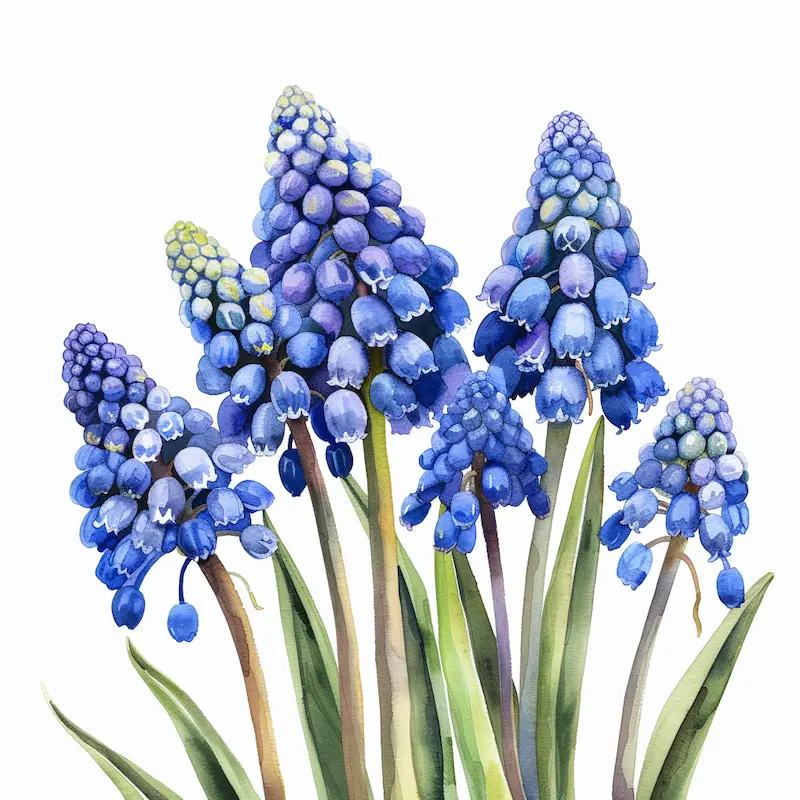
Armenian Grape Hyacinth is a small yet incredibly charming spring herald that has been cultivated in European and worldwide gardens for over a century. Native to the mountainous slopes of the Caucasus and Asia Minor, this bulbous plant has long captured the hearts of gardeners with its reliability and undemanding nature. In wild populations, Muscari armeniacum grows among rocks and grasses, competing for moisture, so in the garden it feels at home even under unconventional conditions.
The plant presents the impression of an exquisite work of nature: delicate, graceful foliage forms a modest rosette, from which emerge elegant inflorescences packed with tiny blue-purple florets that resemble grape clusters—hence the English nickname "Grape Hyacinth." It blooms at the turn of April and May, when the garden is still drowsy. In practice, this hyacinth multiplies very easily: bulblets naturally produce offsets, and after a few years a small group transforms into an entire haze of blue colour. Although several select cultivars exist, the true species armeniacum remains the most popular and resilient.
In the garden, Muscari armeniacum is an ideal companion for tulips, daffodils, and crocuses, and looks particularly striking in group plantings on lawns or in front of borders of evergreen plants. It requires no special care: plant in autumn, forget until spring—and it looks after itself. Even in the most modest gardens, where time for plant care is scarce, this hyacinth never disappoints and brings joy year after year.
Interesting fact: the species received its name for possessing a delightful, barely perceptible soft musky fragrance that the flower releases on warm days. This small but refined detail makes the plant truly special and worthy of a place in even the most demanding gardens.
Grape Hyacinth — planting & location
Bulbous plant that spreads rapidly.
How to water Grape Hyacinth
Avoid overwatering.
Fertilizing and pruning: Grape Hyacinth
Cut back foliage after it yellows.