Spring Crocus
Saffron is the stigma of Crocus sativus, the most expensive spice in the world.
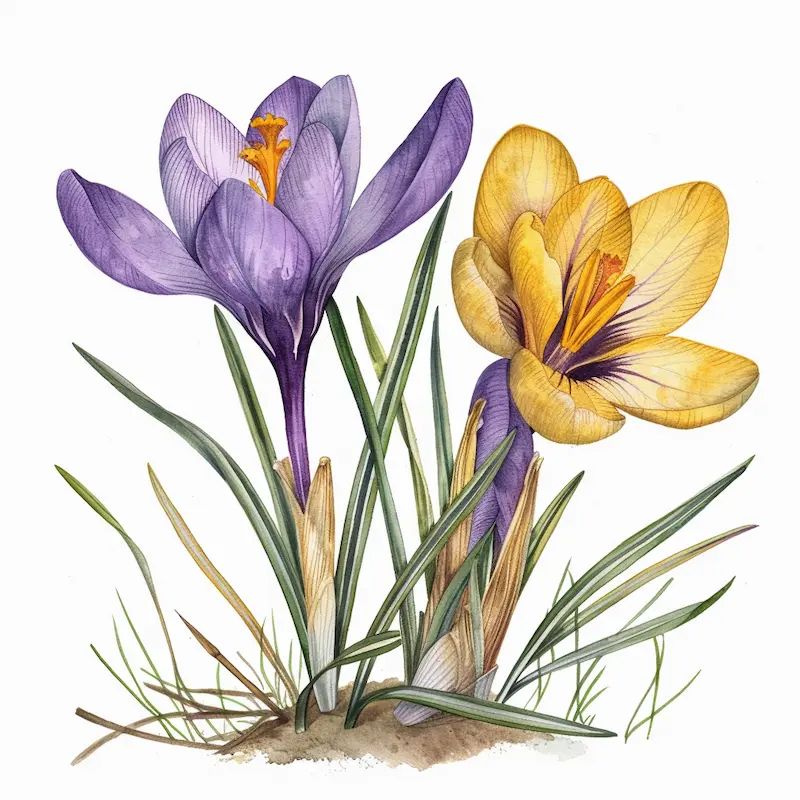
Spring Crocus is one of the earliest and most beloved flowers in gardeners' hearts, bestowing colour when spring has scarcely touched the earth. This hybrid (Crocus × vernus) is descended from the crossing of several Southern European species and has delighted gardeners worldwide for over 500 years with its undemanding nature and dependability.
Each crocus bulb is like a tiny treasure chest. From it emerge slender grass-like leaves and enchanting cup-shaped flowers that bloom in March–April in a palette ranging from delicate violet to pristine white and sunny yellow. Modern cultivars offer us particularly large and vibrant blooms, yet even common crocus varieties captivate with their graceful elegance. They flower as if on command, creating veritable carpets of colour throughout the garden.
In the garden, crocuses deserve a splendid place: plant them in groups on lawns, in alpine rockeries, along pathways, or amongst perennial borders. They coexist beautifully with other early bloomers—snowdrops, squills, and primulas. These plants demand scarcely any maintenance—give them sun and proper drainage, and they will gratefully return each spring.
Crocus is a true ephemeral: its above-ground parts quickly yellow and fade, making way for summer flowers. This very transience holds its enchantment—it teaches us to treasure fleeting moments of beauty. If you don't yet have crocuses, be sure to plant them in autumn; for three to four years running, they will flower increasingly abundantly, multiplying of their own accord.
Spring Crocus — planting & location
First spring flower, ephemeral.
How to water Spring Crocus
Do not water after flowering.
Fertilizing and pruning: Spring Crocus
Cut back after yellowing.