Meadow Sage
The name Salvia derives from the Latin 'salvare'—to save or heal, referring to its medicinal properties.
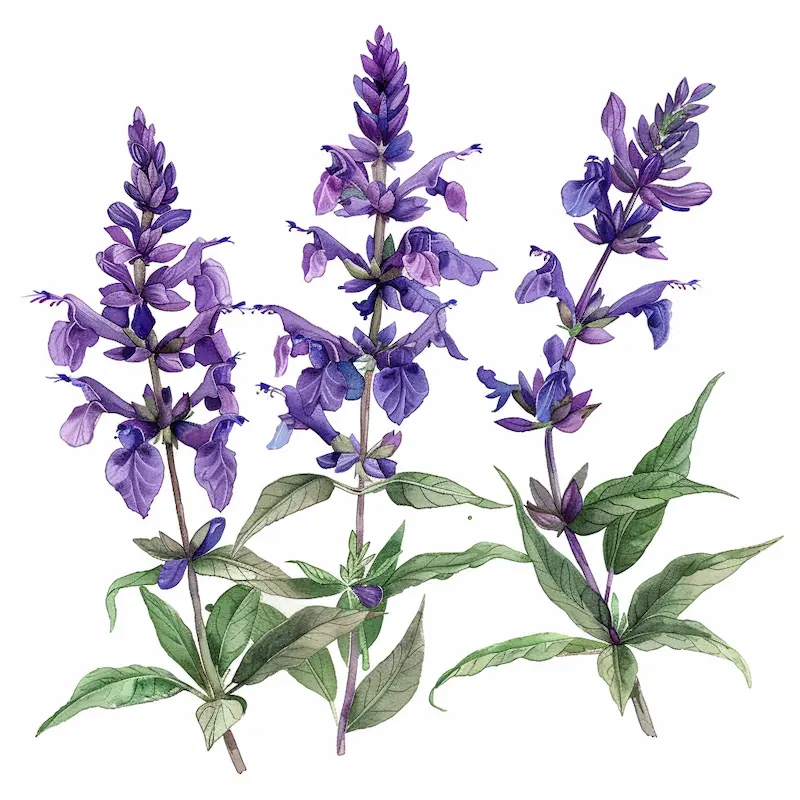
Meadow Sage is one of the most beloved perennials in gardens throughout the world, and for good reason. It originates from the steppe and forest-steppe regions of Europe and Asia, where for centuries it has captured the attention of both gardeners and herbalists with its undemanding nature and enchanting beauty. Today, this plant has become an indispensable element of flower beds and borders, particularly where one wishes to add vertical interest and striking violet-blue tones.
Tall flower spikes densely packed with delicate blooms are the true jewel of Meadow Sage. The quadrangular stems often bear a slight downy covering, whilst the leaves, which possess a characteristic aromatic fragrance, are arranged oppositely along their entire length. Plant breeders have created numerous cultivars: from the classic 'Plumosa' with its lavender spikes to the compact 'Ostfriesland' for small gardens, and the multicoloured 'Wesuwe' with striped flowers. Each variety retains the essential charm of the species—elegance, grace, and remarkable appeal.
In the garden, Meadow Sage performs beautifully. It is remarkably drought-tolerant, requires infrequent watering, and is beloved by bees and butterflies, which swarm around the flowers from June through August. Position them in a sunny location with well-drained soil, and they will reward you with generous colourful displays. After flowering, the easiest approach is to cut back the spent flower spikes to half their height to encourage repeat blooming.
Fascinating to note is that the Latin name Salvia derives from the word 'salvare'—to save—because in folk medicine many sage species were used as medicinal plants. Meadow Sage is no exception, though in Ukraine it is valued primarily for its ornamental beauty and attractiveness to pollinators. This very combination—beauty, resilience, and benefit to the ecosystem—makes it worthy of a place in every garden.
Meadow Sage — planting & location
Drought-tolerant and valuable for pollinators.
How to water Meadow Sage
Dislikes waterlogged soil.
Fertilizing and pruning: Meadow Sage
Cut back spent flower spikes to half their height.