Bearded Iris
More than 300 iris species are known to exist in nature.
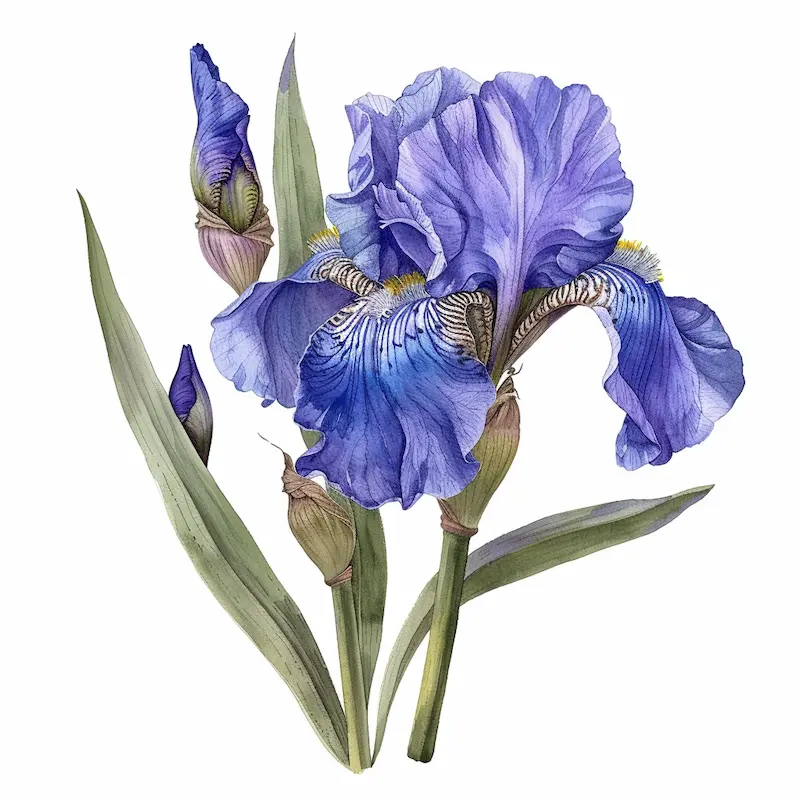
Bearded Iris (Iris germanica) is one of the most beloved perennials in gardens worldwide, and for good reason. Humanity has cultivated this plant for over two millennia: ancient Egyptians and Romans already knew and revered its enchanting beauty. The plant earned the name "bearded" thanks to characteristic hairy projections on the lower petals, which create a distinctive, almost lifelike expression of the flower.
Iris flowers are a true work of art by nature. They consist of vertical petals standing proudly and drooping petals that curve gently downward, creating perfect harmony of form. The diversity of colours is simply captivating: deep indigo and purple, warm gold and rich orange, delicate cream and pure white, as well as endless two-tone combinations. Flowering occurs in May and June, when each plant unfolds dozens of beautiful flowers in succession, creating prolonged and picturesque bloom.
In the garden, Bearded Iris is an ideal companion for those who appreciate beauty without excessive fuss. It thrives in sunny locations with well-drained soil, tolerates drought calmly, and requires virtually no disease protection. Plant it singly in flower beds, in groups for greater impact, or in mixed borders alongside cat mint, sage, and other medium-height perennials — it will look organic everywhere.
Humanity has associated the iris with royal dignity: its image was a symbol of French monarchy for centuries. If you seek a plant that will bestow elegant beauty for years with minimal effort, Bearded Iris is the most foolproof choice for a gardener of any experience level.
Bearded Iris — planting & location
Does not tolerate waterlogging.
How to water Bearded Iris
Do not water at the rhizome neck.
Fertilizing and pruning: Bearded Iris
Cut foliage to one-third in autumn.