Black Locust
One hectare of Black Locust yields up to 1 tonne of honey per season—Ukraine's most important honey plant.
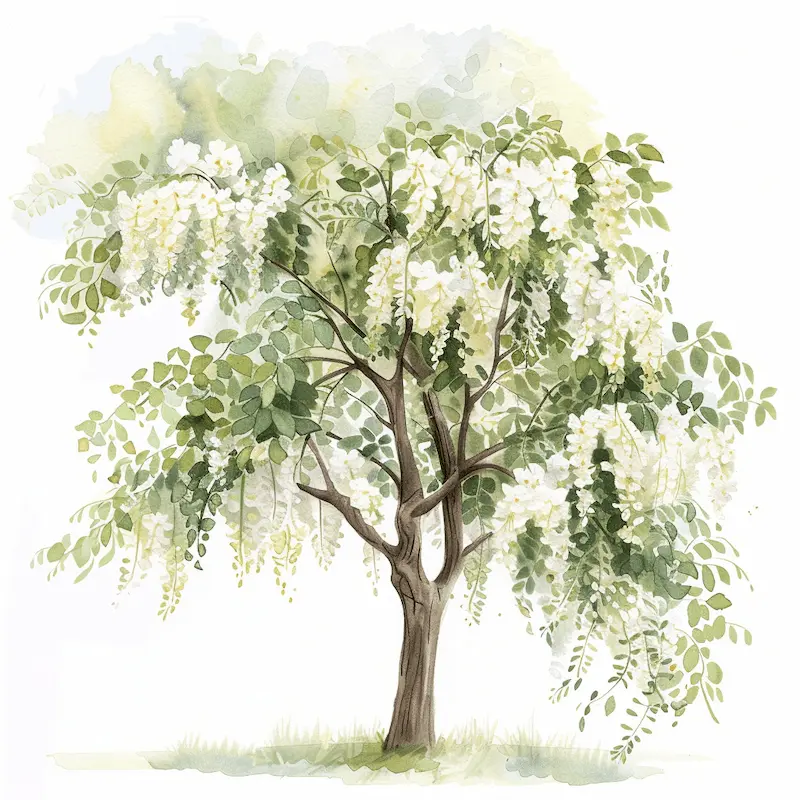
Black Locust is a true queen among honey-producing trees, originating from the eastern regions of North America. In the early eighteenth century, European gardeners and beekeepers 'introduced' this enchantress across the Atlantic, and she now flourishes in gardens from Britain to Ukraine. With her simplicity and charm, she has won the hearts of gardeners worldwide—a tree that asks for practically nothing but a sunny location.
The tree first impresses with its appearance: delicate, feathery leaves give it an air of lightness, almost ethereal grace. In spring, as May arrives, the crowns burst forth with clusters of delicate white flowers bearing a subtle sweet fragrance. Varieties differ in character—some remain compact shrubs whilst others grow into true giants. There are also ornamental forms with golden foliage or weeping branches that add particular charm to the garden.
In the garden, Black Locust is a universal helper. It combines beautifully with hawthorn, wild rose and juniper, creating harmonious compositions. The plant is utterly undemanding: minimal watering, any soil from acidic to alkaline, no fertilising required—it is its own gardener, extracting nitrogen from the air through symbiosis with its roots.
But Black Locust's greatest talent is the gift of generosity. One hectare of this marvel yields up to one tonne of Ukraine's finest honey in a season. If you keep bees or simply wish to support pollinator populations, Black Locust is not merely a garden ornament, but truly a noble mission.
Black Locust — planting & location
Intensive honey plant, edible flowers, very vigorous grower.
How to water Black Locust
—
Fertilizing and pruning: Black Locust
Remove only dead and diseased branches.