Primrose
The name derives from the Latin 'primus' meaning first: the first spring flower.
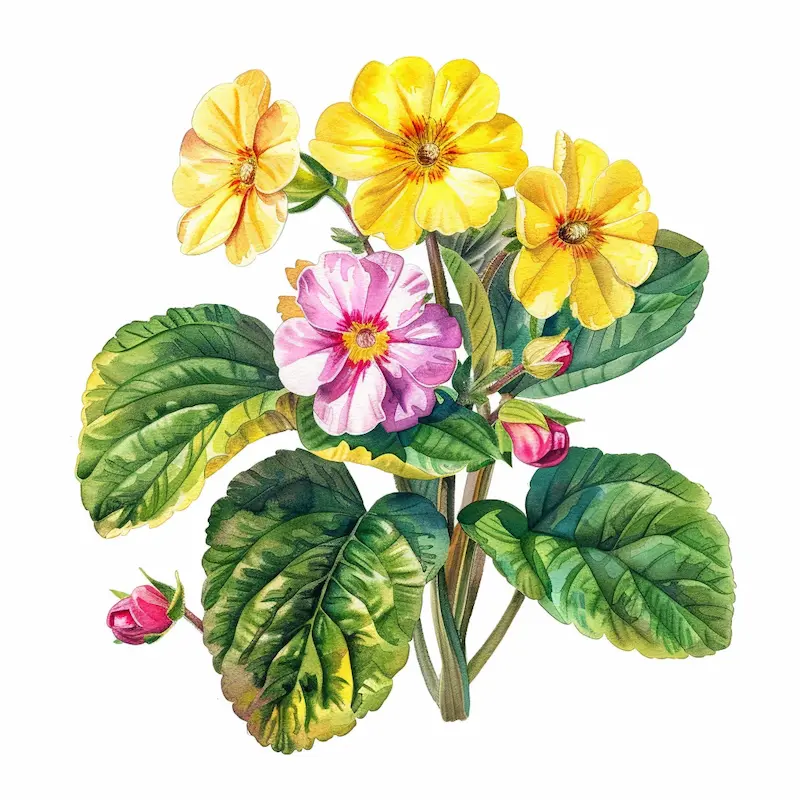
The polyantha primrose is a true queen of the spring garden, flowering among the first when snow has scarcely melted. This hybrid perennial was born in Europe as a result of crossing various primula species and quickly won the affection of gardeners throughout the world. Today it has become a symbol of nature's spring awakening, a signal that warmth is returning.
Each primrose flower is like a tiny star: five petals form a rosette, and the centre often contrasts with the main colour, creating a jewel-like effect. The palette of varieties is simply astounding: from soft yellows and whites to deep burgundy, violet and pink shades. Some varieties have ruffled petal edges, others bear double flowers, bringing additional elegance and diversity to the garden.
In the garden, the primrose plays the role of a natural assistant in the transition from early spring to flowering summer. When crocuses and snowdrops have finished blooming, the primrose takes up the mantle of bright colour. It looks wonderful massed near hedgerows, on flower beds, in containers near the house entrance or amongst the stones of an alpine rock garden. Primrose also serves as an excellent companion for bulbous plants, concealing their yellowing foliage.
If you are seeking a plant that will bring the garden's first brilliant colours and lift your spirits during the dreariest time of year, the polyantha primrose is precisely what you need. It is modest in its requirements yet generous in its rewards, bringing several weeks of pure joy and spring optimism to every garden.
Primrose — planting & location
First spring flower after bulbs.
How to water Primrose
Do not allow the soil to dry out.
Fertilizing and pruning: Primrose
Remove spent flower heads after blooming.