Snowdrop
Listed in the Red Book; collection from the wild is prohibited.
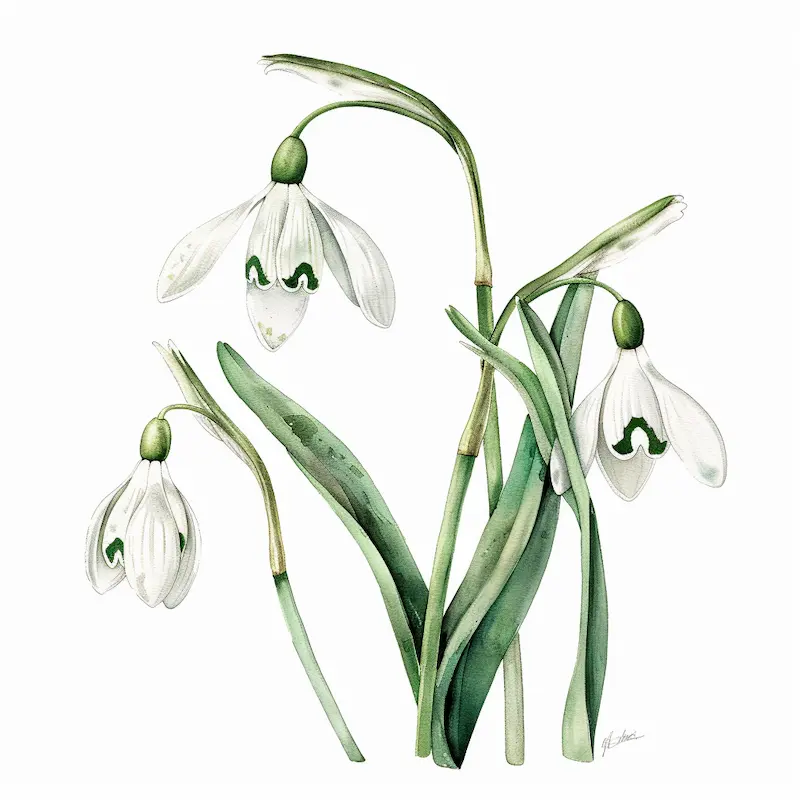
The Common Snowdrop is one of the first harbingers of spring, appearing when snow has not yet fully melted. This undemanding perennial plant, native to Europe, has captured the hearts of gardeners worldwide thanks to its enchanting simplicity and symbolism of hope. For centuries, the snowdrop has held a special place in the cultures of European peoples, associated with nature's renewal after the harsh winter.
The delicate white bell-shaped flowers of the snowdrop are a true miniature marvel. Each flower consists of six petals, with three outer petals longer than the three inner petals, which feature delicate greenish-white markings. They form a semi-closed bud that opens only when there is sufficient warmth, then closes again at night. Through many years of selective breeding, several enchanting cultivars with double flowers or more striking markings have been created, yet the classical form remains the most elegant and refined.
In garden design, the snowdrop is an indispensable helper for those who wish to fill early spring with living colour. It looks wonderful in large groups beneath deciduous trees and shrubs, where dense foliage will not shade them in summer. Plant snowdrops together with Chionodoxa, crocuses and muscari to create a wave of flowering enchantment in February and March. Even in small gardens, space can be found for this plant — it occupies little room yet brings disproportionately much joy.
It is important to know: the wild snowdrop is listed in the Red Book of Ukraine, so collecting it in nature is strictly forbidden. However, cultivated garden varieties are grown in nurseries and are entirely safe for nature. Grow them with a clear conscience and allow yourself to enjoy the first flower of the year, which proudly raises its head from beneath the snow.
Snowdrop — planting & location
One of the first flowers of the year, grows even through snow.
How to water Snowdrop
Do not water after foliage dies back.
Fertilizing and pruning: Snowdrop
Foliage dies back naturally.