Sea buckthorn
Sea buckthorn oil was one of the first products used by Soviet cosmonauts for skincare.
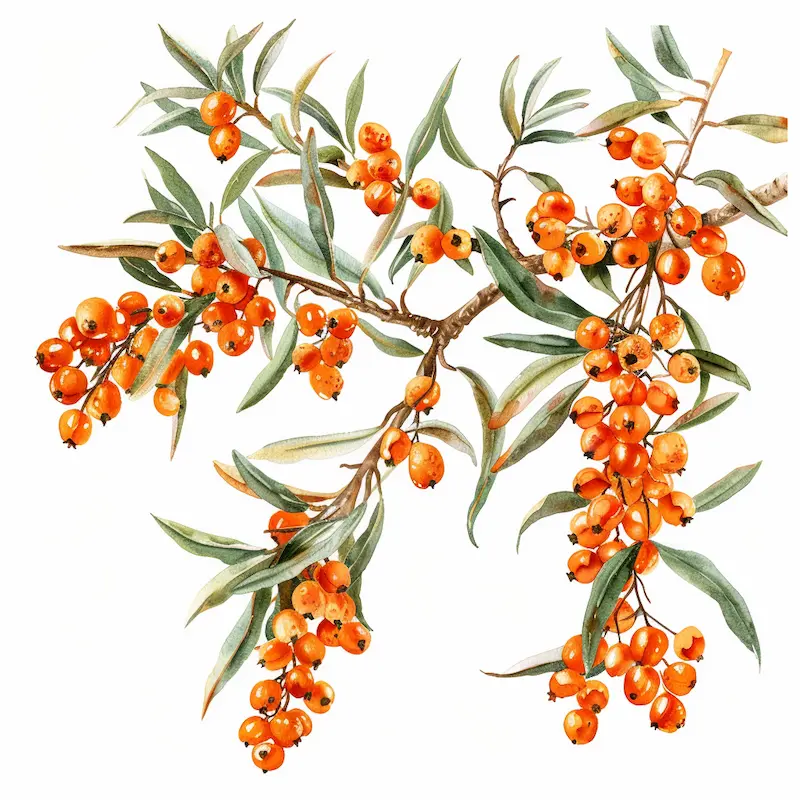
Sea buckthorn is one of the most ancient crops cultivated by humans since antiquity. This hardy plant originates from coastal regions of Asia and Europe, where it became a favourite among gardeners due to its unpretentiousness and wealth of beneficial properties. Throughout the centuries, sea buckthorn has been valued for its ability to stabilise soil on slopes and produce magnificent harvests of golden berries.
In appearance, it is a low, thorny shrub with narrow silvery leaves that lend it a particular lightness and grace. The berries—ranging from pale yellow to orange-red—cling densely to the branches, which is how the plant acquired its Ukrainian name. There are several sea buckthorn varieties with different fruit sizes and flavours, but all are divided into male and female plants; without such a pairing, there will be no harvest. It flowers modestly but early—in April, when the garden is still sleepy.
In the garden, sea buckthorn thrives alongside chokeberry, currant, and rowan, creating a tapestry of varied hues and textures. It can be planted as a hedge, used as a bank-stabilising plant, or simply as a source of vitamin-rich harvests for the whole family. This crop requires no complicated care—it grows readily in sunny locations, tolerates both drought and winds, and its roots even enrich the soil with nitrogen.
Interestingly, Soviet cosmonauts brought sea buckthorn oil aboard space stations for skincare—and this was far from accidental. If you are seeking a plant that will be generous with harvest, tireless in cold conditions, and provide you with nature's treasures, sea buckthorn is exactly what your garden needs.
Sea buckthorn — planting & location
Berries cling to branches; requires both male and female plants
How to water Sea buckthorn
Drought-tolerant after establishment
Fertilizing and pruning: Sea buckthorn
Remove dead and old branches (wear gloves!)