Forget-Me-Not
In Germany, the forget-me-not is a symbol of remembrance and loyalty.
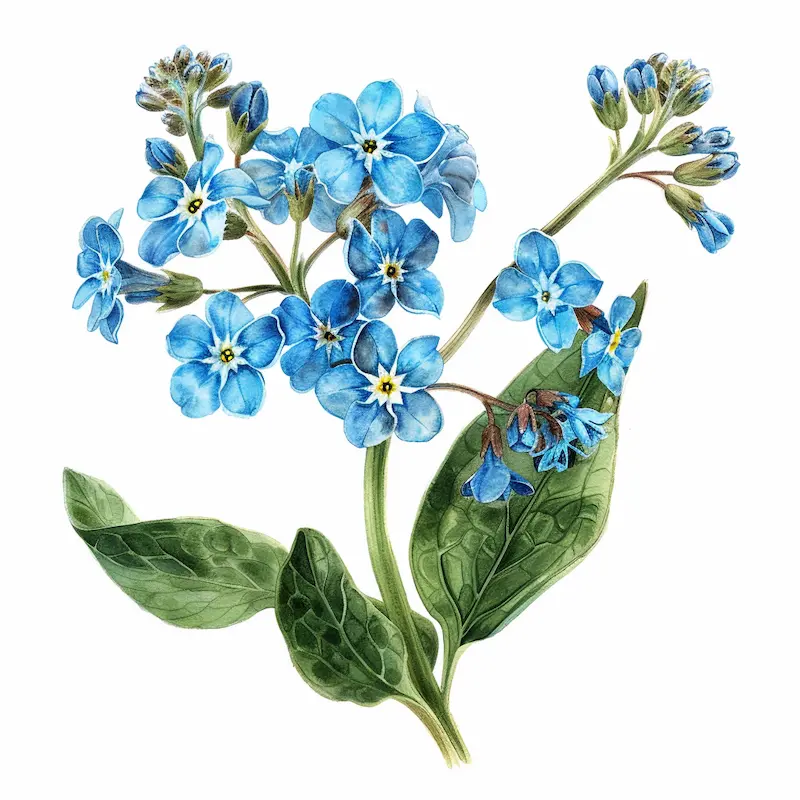
Woodland Forget-Me-Not is one of the most beloved plants in European gardens, and with good reason. This charming biennial has been cultivated for several centuries, prized for its disarming simplicity and generous flowering. It originates from the forested regions of Europe and Asia, where it still grows wild in shaded corners near streams and damp meadows.
The tiny, delicate flowers of Forget-Me-Not are a true marvel of nature. Each flower, like a miniature star, unfolds on long slender stems above a soft carpet of foliage. They are predominantly blue with a yellow 'eye' in the centre, but plant breeders have gifted us pink, white, and even deeper blue varieties. They bloom from April to June, filling the garden with light and freshness.
In the garden, Forget-Me-Not is a delightful companion for those difficult spots where other plants refuse to grow. It settles contentedly in partial shade beneath tree canopies, among shrubs, and on the banks of water features. It looks splendid in mixed borders, garden streams, and containers. The paradox of Forget-Me-Not lies in the fact that although it is a biennial, it self-seeds so generously that it seems like an eternal visitor to the garden—each year it appears in unexpected places, as if a gift from spring.
In Germany, Forget-Me-Not became a symbol of remembrance and faithfulness—perhaps because it returns so reliably year after year. If you wish your garden to shimmer constantly with something delicate and trembling in blue light, plant Forget-Me-Not, and it will reward you with self-renewal and countless tiny stars.
Forget-Me-Not — planting & location
Biennial with prolific self-seeding.
How to water Forget-Me-Not
Moisture-loving plant.
Fertilizing and pruning: Forget-Me-Not
Remove entirely including roots after seed set.