Dwarf Russian Almond
The wild relative of cultivated almond is frost-hardy to –40°C.
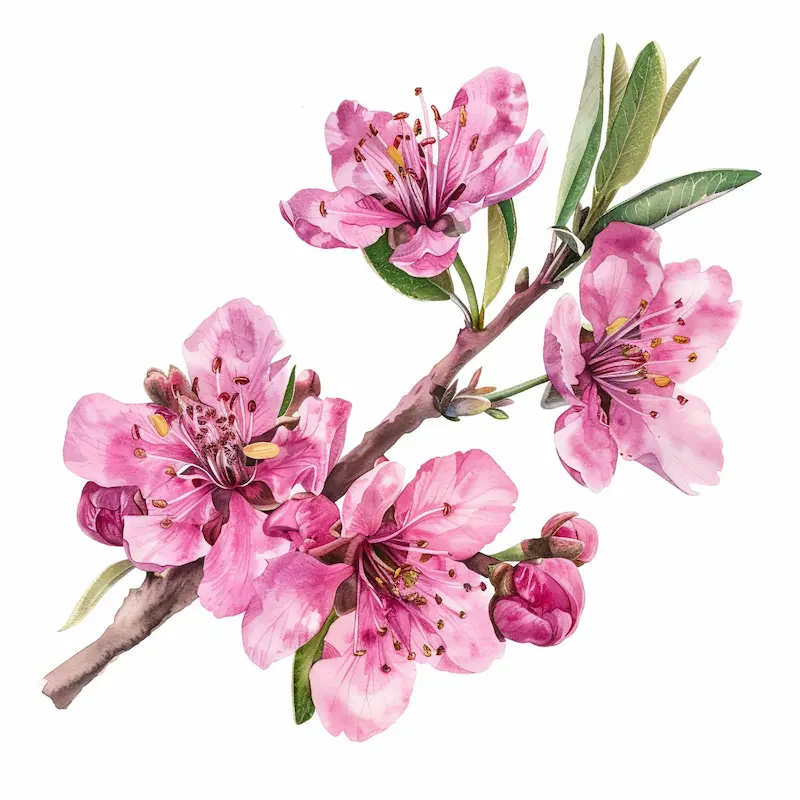
Dwarf Russian Almond is a true spring queen among ornamental shrubs. This wild relative of the cultivated almond originates from the southern steppes of Europe and Asia, where it adapted to harsh conditions millions of years ago. Unlike many spring flowers, dwarf Russian almond requires neither gardener's care nor frequent watering—it is ready to compete with drought on equal terms.
Meeting this plant in your garden is receiving a true gift from nature. In April and May, the shrub is covered with dense pink flowers that bloom before the foliage fully unfolds. The sight is breathtaking: delicate branches appear painted with dilute pink dye. The compact size of the shrub (up to 1.5 metres) makes it ideal for small gardens, yet it finds its place in large compositions as well. It looks splendid grouped with forsythia and jasmine—the contrast of yellow, white and pink flowers creates a true celebration.
Undemanding by nature, this plant requires minimal care: a sunny location and light soil—and the shrub will delight you for years. In spring, give it some balanced fertiliser, and it will be covered with flowers. In summer and autumn, you can forget about feeding—the almond manages itself. Therein lies its true magic: the plant offers maximum beauty with minimum effort.
Wild populations of dwarf Russian almond withstand frosts down to –40°C—which is why it grows confidently throughout Ukraine. If you wish for early spring in your garden, if you dream of a plant that requires no constant attention yet offers unforgettable beauty—dwarf Russian almond is your choice. Plant it in a prominent spot and marvel at how early nature awakens in your garden.
Dwarf Russian Almond — planting & location
Drought-tolerant, one of the first to flower in spring.
How to water Dwarf Russian Almond
Drought-tolerant.
Fertilizing and pruning: Dwarf Russian Almond
Remove one-third of old stems.