Loquat
Flowers in winter at –5°C—one of the few plants that blooms in December.
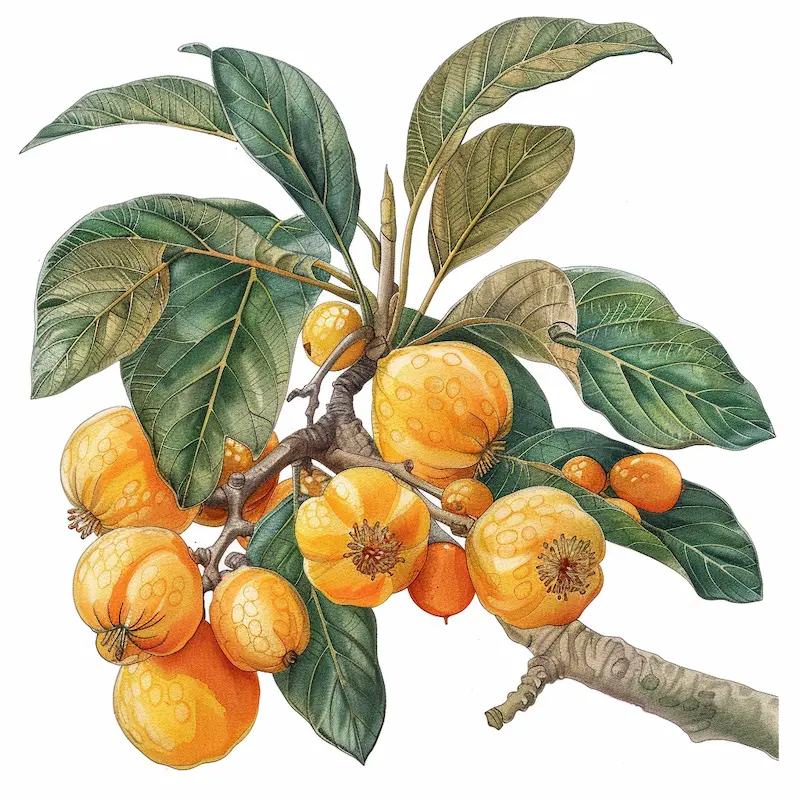
The Japanese loquat is a charming fruiting plant with a long history of cultivation in Asia, bringing joy to gardeners for centuries with its remarkable characteristics. Originating from the southern regions of China, it has spread across the globe and become a symbol of winter flowering in warm climates. For Ukrainian gardens, it represents genuine exotica that demands special conditions but compensates for its demanding nature with extraordinary beauty.
Indeed, the Japanese loquat ranks among the most interesting fruiting plants in terms of appearance. Evergreen foliage with characteristic rough texture provides decorative appeal throughout the year. But true magic begins in autumn: from November through February, the plant becomes covered with delicate, charming white flowers that are not only beautiful but also notably fragrant. Fruits appear later—orange, soft pear-like drupes the size of a walnut, with a wonderful sweet-tart flavour. Several varieties exist, differing in size and fruit taste, though in Ukrainian gardens the hardier local forms are most commonly cultivated.
In garden design, the Japanese loquat finds its place alongside other heat-loving crops—figs, persimmons, or grapes. It creates an interesting contrast with its evergreen foliage and winter flowering, when most plants sleep. Even without a harvest, the plant's ornamental qualities justify its space in the garden. Flowering at temperatures as low as minus five degrees Celsius is almost miraculous in the Ukrainian climate.
The Japanese loquat deserves a place in the heart of any southern gardener. If you have a warm, sunny corner, attempt growing this exotic specimen—it will reward you with winter flowering when most of nature sleeps, and sweet summer fruits.
Loquat — planting & location
Tropical variety—suitable only for the Crimean coast and Odesa.
How to water Loquat
Water during the fruiting period.
Fertilizing and pruning: Loquat
Remove weak and diseased branches.