Fig
The fig is one of the earliest domesticated fruits: specimens have been found dating to 11,400 BCE.
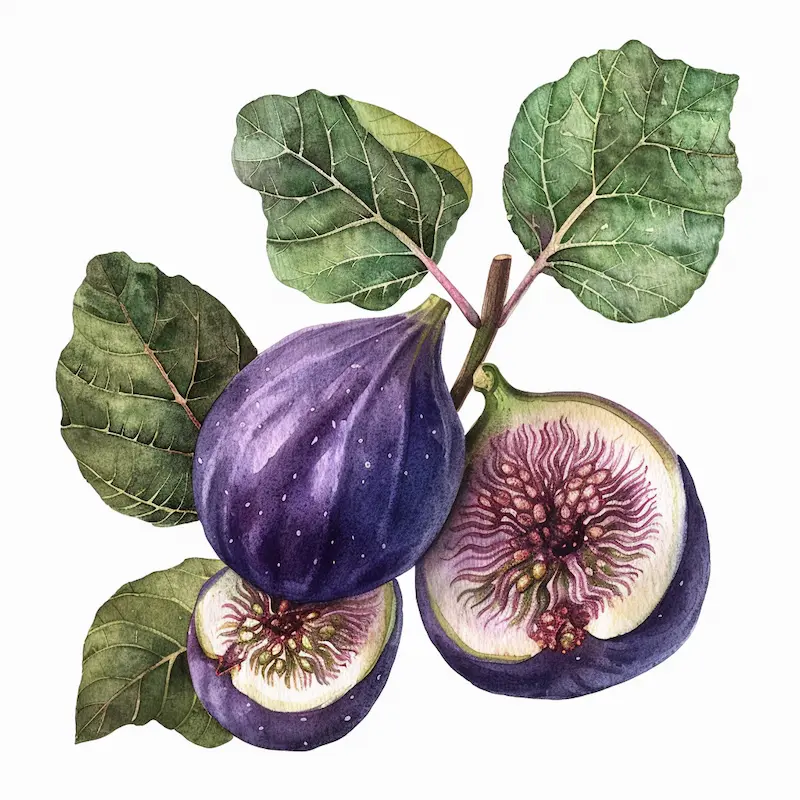
The fig is one of the oldest fruit crops, accompanying humanity for millennia. It originates from the Mediterranean and Western Asia, yet has long established itself in gardens even in temperate climates. Its popularity is no accident: this undemanding plant bears abundantly in sunny locations, requiring only modest watering and minimal care.
Outwardly, the fig truly impresses with its exotic character. Large, deeply lobed leaves with a velvety surface create a decorative effect even before fruiting. The tree or large shrub typically branches from ground level, forming a beautiful habit, whilst fruits appear directly from the branches—a sight that always astonishes beginners. There is great variety among cultivars: from early and cold-hardy varieties (such as 'Brunswicker' or 'Black Isabella') to heat-loving southern beauties that produce the sweetest fruits.
In the garden, the fig pairs excellently with grapevine, apricot, and peach—all of which love warmth and well-draining soil. Plant it in a sheltered spot on the south-facing side, and the plant will generously reward you with harvests. For central Ukraine, it is recommended to select winter-hardy varieties or prepare for winter protection during the cold season.
The most enchanting fact: the fig is among the first domesticated fruits in civilisation's history. Archaeologists have found traces of it in cultures dating to 11,400 years before our era—even earlier than the cultivation of wheat or barley. When you plant a fig in your garden, you become part of this ancient tradition that has endured for over ten thousand years, and each harvest is a legacy of our ancestors.
Fig — planting & location
Heat-loving; in central regions, requires winter protection only under shelter
How to water Fig
Water regularly during fruit development
Fertilizing and pruning: Fig
Maintain a bushy form