Date plum
The name Diospyros derives from Greek meaning 'food of the gods' – a reference to the flavour of the fruit.
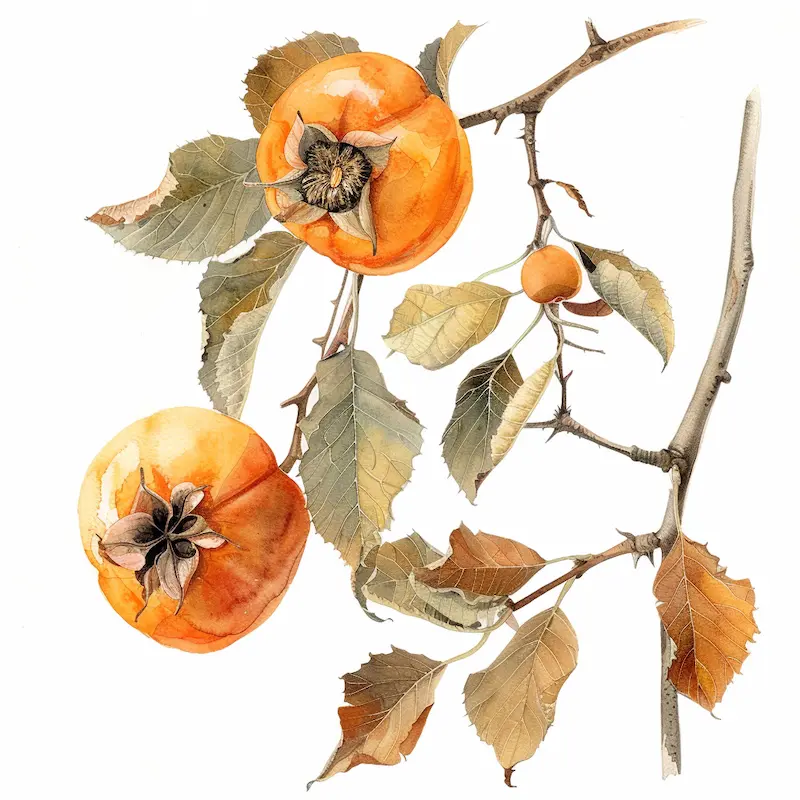
The date plum is one of the oldest fruit crops, originating in Western Asia and spreading throughout the Mediterranean over centuries. This plant has been known to humanity since antiquity, when its fruits were valued for their sweetness and nutritional content. Today it remains a favourite among gardeners thanks to its unpretentiousness and reliability in harsh climatic conditions.
The date plum impresses with its elegance: delicate foliage with a subtle gloss, small flowers in June, and tiny round fruits the size of peas that develop a golden-orange hue. Unlike the Chinese persimmon, the fruits of this species are considerably more modest in size, but their distinctive feature is that they become truly edible and palatable only after the first frosts—nature's own "preservation" for winter harvesting. The plant develops into a compact tree with a spreading crown that creates a wonderful ornamental effect in gardens.
For successful cultivation of date plums, it suffices to choose a sunny location with well-drained soil—it is undemanding regarding soil composition and adapts easily to various conditions. It pairs beautifully in the garden with apple, plum, and quince trees, creating a harmonious composition typical of traditional fruit gardens. The drought-tolerant nature of this plant makes it an ideal choice for regions with unreliable rainfall.
The magic and wonder of this plant lies in its botanical name: Diospyros means nothing less than "food of the gods"—an honour bestowed upon it by ancient Greek naturalists for the incomparable sweet flavour of the fruits after frost. When autumn arrives and the foliage takes on crimson tones whilst the tree adorns itself in golden and orange fruits, one understands why it was called a gift from the gods. It is an excellent choice for those wishing to add a long-forgotten crop to their garden that demands little attention yet offers incomparable beauty and flavour.
Date plum — planting & location
Fruits become edible after frost; ornamental in autumn
How to water Date plum
Drought-tolerant once established
Fertilizing and pruning: Date plum
Remove only diseased branches