Common Plum
Only 250 g of prunes can be obtained from 1 kg of fresh plums after drying.
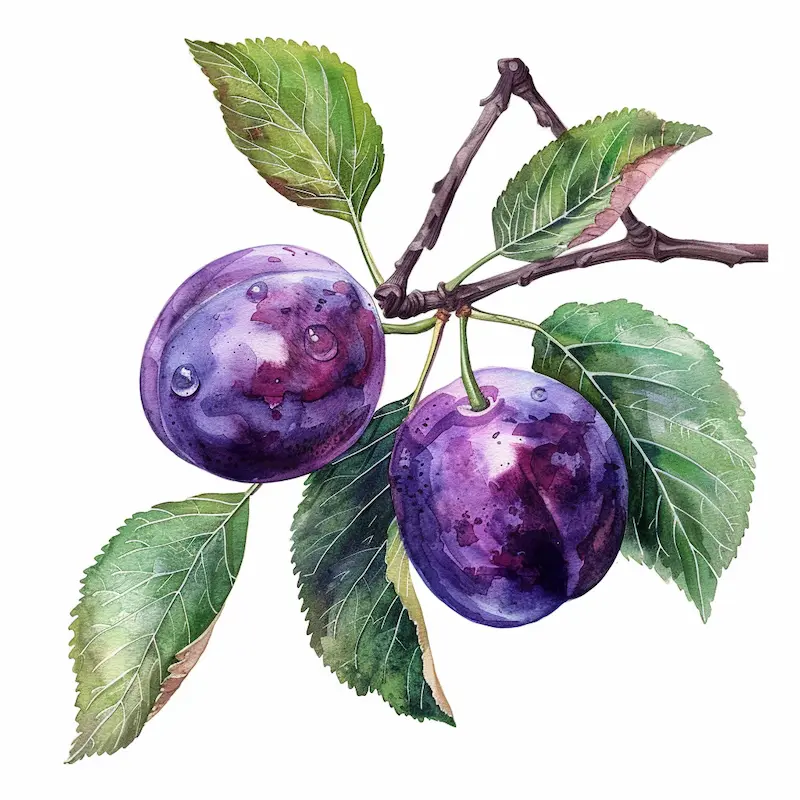
The plum is one of humanity's oldest cultivated fruits, originating from the Caucasus and Central Asia. This plant has been grown for over 2,000 years and has long become an integral part of gardens in temperate zones. Plums are valued not only for their flavour but also for their reliability—this tree requires no exhausting care, and its white spring flowers create a genuine celebration in the garden from April through May.
Modern plum varieties have gifted us a true palette of colours—from deep blue and black to vibrant red, yellow, and even green. The fruits differ not only in appearance but also in taste: some are wonderful eaten fresh, others are ideal for preserving, and still others make excellent prunes. This medium-sized tree (3–6 m) fits easily into any garden, and its compact form allows it to be grown even in modest spaces.
In the garden, the plum feels like a 'subject' rather than an object. It neighbours well with apple, cherry, and apricot trees, creating a natural stone fruit garden. In a sunny location with moderate watering, the tree produces a generous harvest each year—its productivity will pleasantly surprise you. Despite its simplicity, do not forget about light crown thinning for better fruit production.
Interesting fact: to obtain 1 kg of prunes, one needs as much as 4 kg of fresh plums. This transformation under the sun further emphasises the value of each fruit. If you have dreamed of a garden that is both beautiful and practical, the plum is the very tree with which to start.
Common Plum — planting & location
Fruit colours vary: blue, yellow, red, and green.
How to water Common Plum
Essential during fruiting.
Fertilizing and pruning: Common Plum
Maintain an open canopy.