Quince
One kilogramme of quince fruit contains up to 15 g of pectin—a natural gelling agent.
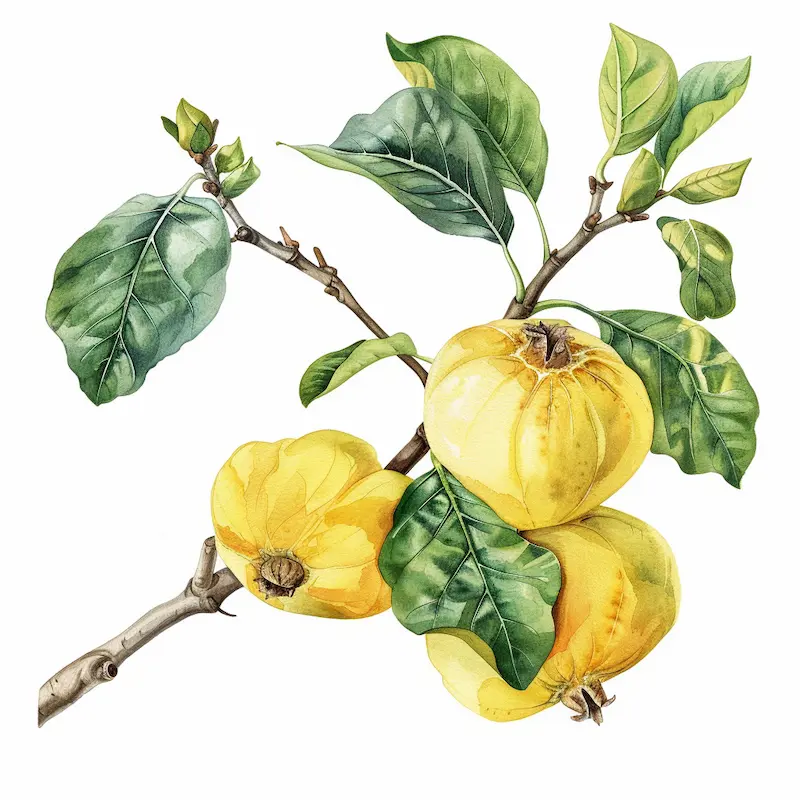
Quince is one of the oldest fruit crops, accompanying humanity for more than three millennia. Its birthplace lies in the Caucasus and Central Asia, yet today this plant has successfully established itself worldwide, including Ukraine. Unforgettable pale pink and white blossoms flower in early spring, transforming the garden into a true fairy tale and filling it with a delicate fragrance.
Externally, the quince is a compact tree with a beautiful spreading crown that appears extraordinarily decorative during flowering. The fruits have a characteristic pear-shaped or apple-shaped form, a golden-yellow colour, and are so fragrant that they perfume indoor spaces for weeks. Southern Mediterranean varieties produce larger and sweeter fruits, whilst locally adapted forms compensate with superior frost hardiness and resilience.
In the garden, the quince is a universal and excellent companion for apple, pear, and apricot trees. It creates a natural windbreak protecting heat-loving crops grown nearby. Raw fruits are not eaten—they always require cooking—but this is precisely what makes them an invaluable treasure for jams, marmalades, and compotes. One kilogramme of fruit contains up to fifteen grammes of natural pectin, making the quince the queen of all gelatinous delicacies.
Most interestingly, the quince symbolises happiness and fertility in cultures where it flourishes. The ancient Greeks called it the golden apple, whilst Jews considered it a symbol of righteousness. If you seek a plant combining ornamental beauty, practicality, and profound cultural significance, the quince awaits its place in your garden.
Quince — planting & location
Fruit is not edible raw—suitable only for jam and marmalade
How to water Quince
Moderate watering
Fertilizing and pruning: Quince
Thin the canopy and remove diseased branches