Bee Balm
Named in honour of Nicolás Monardes, a Spanish botanist of the 16th century.
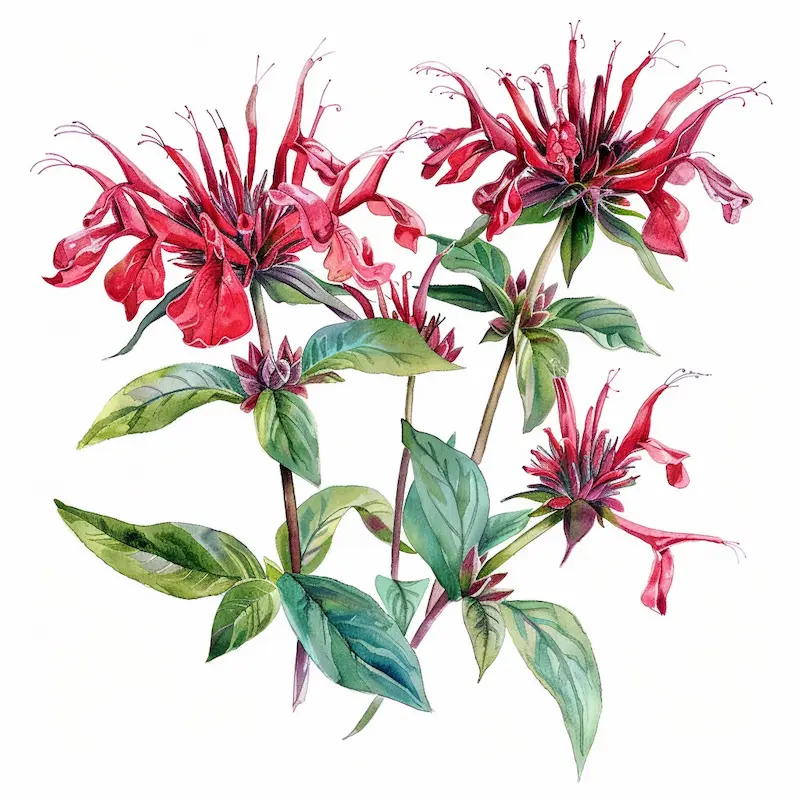
Bee Balm is one of gardeners' most beloved plants, native to North American woodlands and moist meadows. It is renowned for its vigorous growth and generous flowering: from June through September, bright, dense flower clusters bloom on the stems like tiny fireworks arranged in whorls. Colours range from blazing red to soft pink, violet, and white—the choice depends on the variety. The flowers possess a charming aroma reminiscent of minty warmth with a piquant bitterness.
Each flower is, in essence, a miniature marvel: narrow petals with long stamens attract not only rich colour but also an incredible number of bees, butterflies, and bumblebees. This is no coincidence—the name 'Monarda' derives from the sixteenth-century Spanish botanist Nicolás Monardes, who first documented this plant. In garden beds, it quickly forms expansive clumps the size of an entire hydrangea bush, gradually expanding its space. Popular varieties such as 'Jacob Cline' with deep red, 'Raspberry Wine' with wine-violet, or the delicate white 'Schneewittchen' offer sufficient diversity for any garden palette.
Bee Balm is a universal workhorse: it looks splendid in mixed borders, adds charm to bouquets for attracting pollinators, and fills the home with fragrance. Some gardeners grow it solely for brewing aromatic tea or adding leaves to salads. Being vigorous in soil, it also instinctively repels certain pests—natural pest control without chemicals.
One way or another, if your garden awaits a plant combining colour, fragrance, utility, and individuality—Bee Balm is waiting just for you. This is a plant that repays care with generous, lively beauty, and even an undemanding gardener feels like a true magician.
Bee Balm — planting & location
Medicinal, bee-friendly, deters pests.
How to water Bee Balm
Divide clumps every 3–4 years.
Fertilizing and pruning: Bee Balm
Cut back to 5–7 cm in autumn.